Category: Opinion & Analysis

The Unwinding of Institutional Loyalty: Why the Corporate Treasury Model for Crypto Was Always Built on a House of Cards
Opinion & Analysis

The Unwinding of Institutional Loyalty: Why the Corporate Treasury Model for Crypto Was Always Built on a House of Cards

The institutional bull case of the early 2020s was built on a beautifully seductive premise: corporate treasury adoption would build a permanent, unyielding floor for the digital asset market. Tech evangelists painted pictures of a forward-thinking corporate class that would look at inflation, debt expansion, and fiat currency degradation, and systematically replace their cash reserves with digital assets. These corporate buyers, we were told, possessed "diamond hands"—institutional loyalty backed by multi-year fiduciary mandates that would shield them from retail panic.

The Corporate Hold Myth Dies: Why MicroStrategy’s Shock First-Ever Bitcoin Sale Just Shattered Crypto’s Ultimate “Never Sell” Narrative
Opinion & Analysis

The Corporate Hold Myth Dies: Why MicroStrategy’s Shock First-Ever Bitcoin Sale Just Shattered Crypto’s Ultimate “Never Sell” Narrative

For more than half a decade, the institutional bull case for cryptocurrency relied on a singular, unshakeable pillar of faith: the absolute conviction of MicroStrategy. Under the leadership of Michael Saylor, the software-firm-turned-bitcoin-vault built an empire on a fanatical corporate treasury strategy. Their thesis was as unyielding as it was simple: acquire bitcoin continuously, issue debt aggressively to buy more, and under no circumstances—through brutal bear markets or regulatory crackdowns—ever sell a single satoshi. Saylor proudly told the world that his investment horizon was "forever.

The Myth of the Pure Macro Hedge: Why the Escalating U.S.-Iran Conflict Proves Crypto Still Reacts as a Vulnerable Risk Asset During War Triggers
Opinion & Analysis

The Myth of the Pure Macro Hedge: Why the Escalating U.S.-Iran Conflict Proves Crypto Still Reacts as a Vulnerable Risk Asset During War Triggers

For the past several years, cryptocurrency evangelists have parroted a comforting, unified gospel: Bitcoin is the ultimate "digital gold." The narrative claimed that in the event of a systemic global crisis, catastrophic war, or a massive geopolitical shock, capital would flee the fragile, legacy banking infrastructure and rush into decentralized, censorship-resistant digital ledgers. Crypto was pitched as the ultimate, un-correlated bunker asset.

The Illusion of the Crowdsourced Truth: Why the Polymarket Whales Scandal Proves DeFi's Governance Models Are Fundamentally Broken
Opinion & Analysis

The Illusion of the Crowdsourced Truth: Why the Polymarket Whales Scandal Proves DeFi's Governance Models Are Fundamentally Broken

The marketing pitch for decentralized prediction markets was a masterpiece of techno-optimism. For years, platforms like Polymarket were championed not merely as gambling hubs, but as the ultimate arbiters of objective reality. By forcing participants to put financial skin in the game, these platforms promised to bypass biased media, flawed polling, and institutional gaslighting to deliver pure, crowdsourced truth.

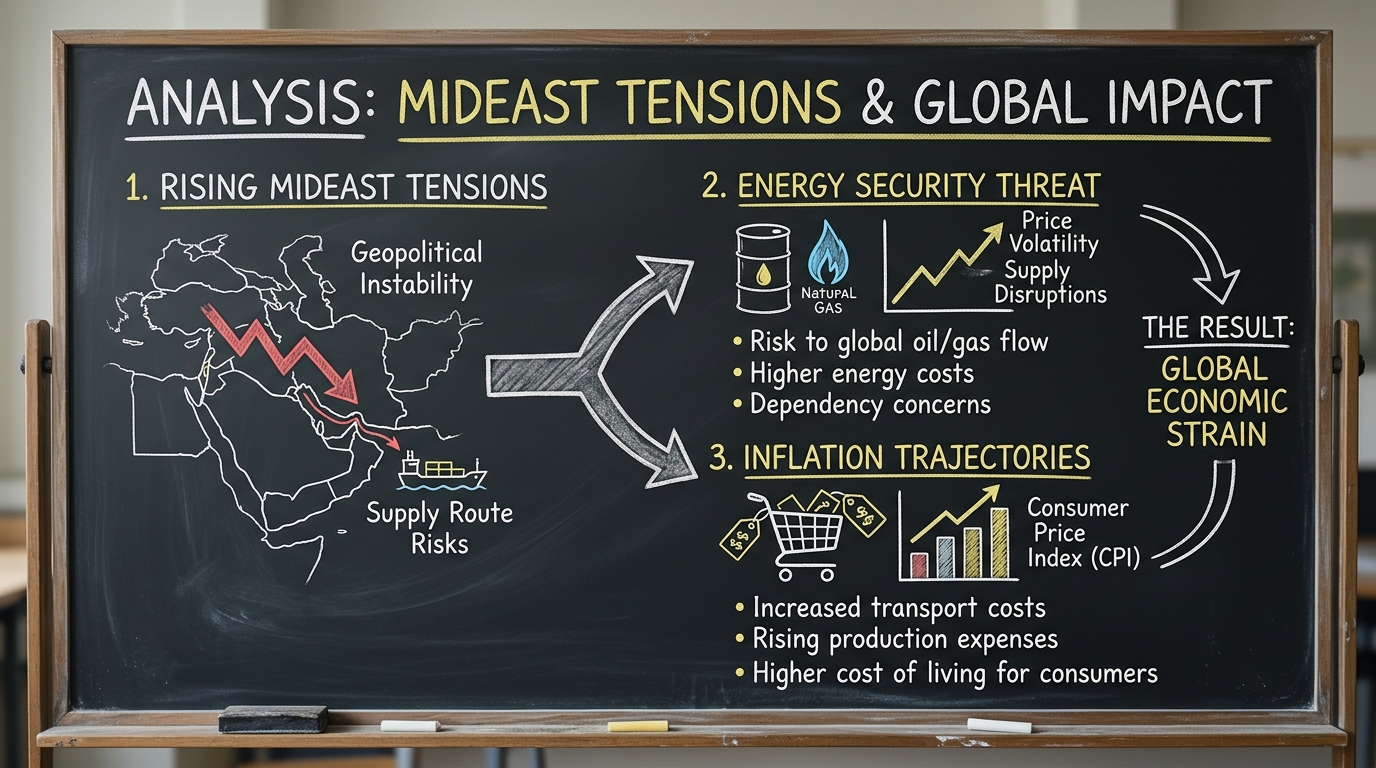
The New Cold War on Energy: Why Supply Chain Vulnerability in the Strait of Hormuz is Acceleration the De-Pegging of Digital and Traditional Risk Assets
Opinion & Analysis

The New Cold War on Energy: Why Supply Chain Vulnerability in the Strait of Hormuz is Acceleration the De-Pegging of Digital and Traditional Risk Assets

For years, institutional financial models operated under a highly predictable assumption: when a major geopolitical shock hits, all risk-sensitive assets bleed together. In the legacy playbook, Bitcoin and high-growth technology equities were bound by a tight, hyper-correlated knot. If an energy crisis threatened global growth, macro funds pulled liquidity from the most volatile, speculative corners of their portfolios first, treating digital tokens and Silicon Valley software giants as variations of the same high-beta trade.

War Over Talks: Why the Failure of the 60-Day U.S.-Iran Ceasefire Is Dragging Down Global Risk Assets
Opinion & Analysis

War Over Talks: Why the Failure of the 60-Day U.S.-Iran Ceasefire Is Dragging Down Global Risk Assets

The fragile diplomatic scaffolding that kept global markets from tipping into absolute panic has finally buckled. For weeks, market strategists and asset allocators pinned their hopes on a proposed 60-day ceasefire extension between Washington and Tehran—a critical diplomatic window mediated by Pakistan and Qatar. The framework promised a temporary halt to the 2026 Iran war, a phased lifting of the U.S. naval blockade on Iranian ports, and the gradual reopening of the critical Strait of Hormuz.

The Mirage of a Truce: Why the Latest U.S.-Iran Military Clash Proves Middle East Risk Premiums Are Here to Stay
Opinion & Analysis

The Mirage of a Truce: Why the Latest U.S.-Iran Military Clash Proves Middle East Risk Premiums Are Here to Stay

The ink on global diplomatic cables was barely dry. Following the devastating exchanges of Operation Epic Fury—which fundamentally upended the regional status quo—the international community let out a collective sigh of relief when a tentative ceasefire framework began taking shape. Markets hummed with cautious optimism as negotiators gathered in Qatar, attempting to hammer out an end to the direct hostilities between Washington, Israel, and Tehran. Then, the reality of the Middle East reasserted itself.

Multilateralism in the New Era: Why the Shift Away from Historic Global Summits Is Rewriting the Rules of Economic Diplomacy
Opinion & Analysis

Multilateralism in the New Era: Why the Shift Away from Historic Global Summits Is Rewriting the Rules of Economic Diplomacy

For decades, the peak of global economic diplomacy looked remarkably predictable. Every year, world leaders from the most powerful economies would gather in sweeping convention halls, stand together for an awkward group photo, and draft a sprawling, 80-page communiqué. These massive, inclusive summits—the G20, the World Trade Organization (WTO) ministerials, the United Nations assemblies—were hailed as the unshakeable bedrock of international cooperation.