Category: Global politics || Posted Jul 03, 2026
Is the U.S. Betting on XRP to Erase its National Debt?
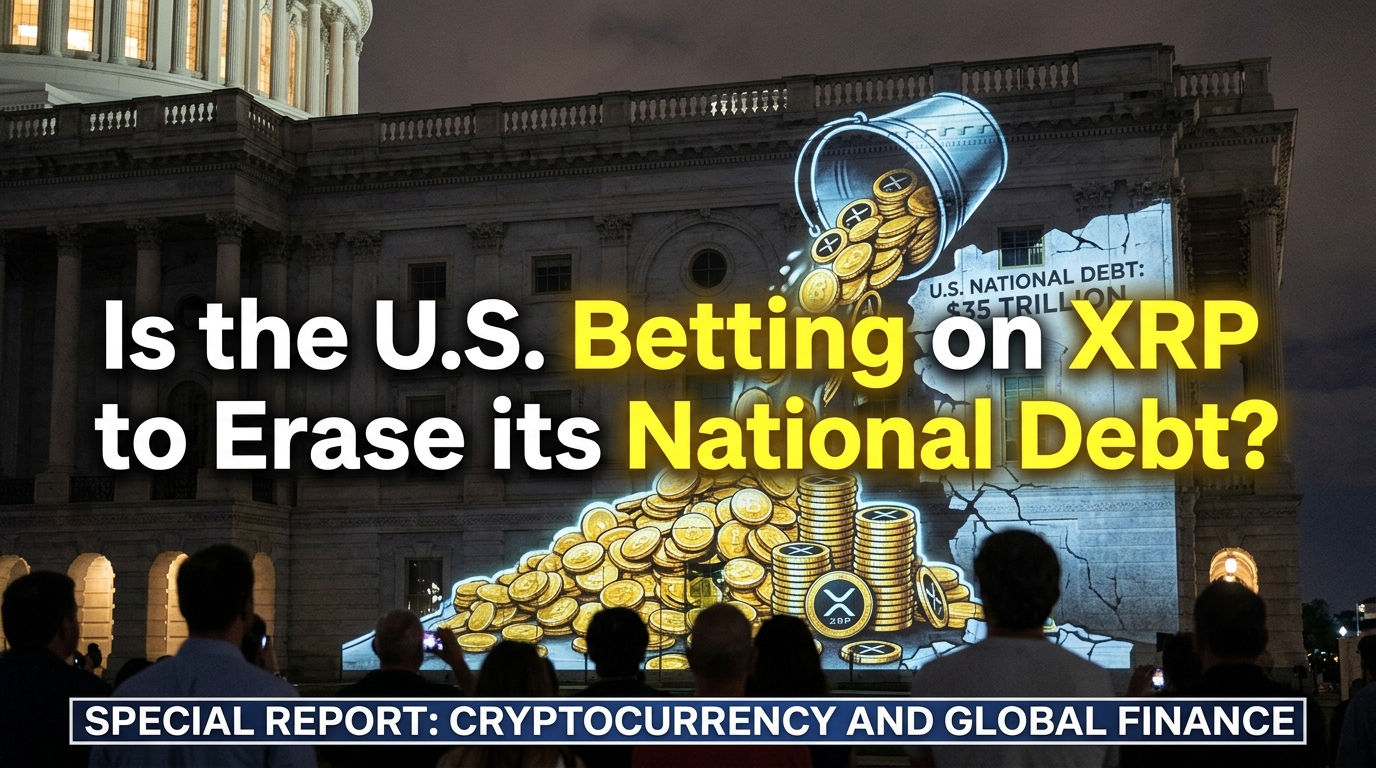
Right now, a massive theory is echoing through the cryptocurrency space: the United States government is preparing to drop trillions of dollars into XRP. The claim? By embracing XRP as a strategic reserve asset, the U.S. can neutralize inflation, modernize its financial infrastructure, and magically wipe out a chunk of its towering $35 trillion national debt.
It’s an explosive narrative that sounds like the ultimate financial reset. But is there any truth to it, or is it just capital speculation running wild? Let’s break down the math, the policy, and what XRP is actually built to do.
The Origin of the Hype
These rumors didn't just appear out of nowhere; they stem from a very real macroeconomic problem. With the U.S. national debt climbing past $35 trillion and the daily interest on that debt costing taxpayers billions, traditional monetary tools are feeling the strain.
- The "Strategic Reserve" Talk: Recent political conversations around creating a strategic reserve of digital assets (like Bitcoin) have opened the floodgates. XRP supporters argue that because XRP is designed specifically for high-speed institutional settlement, it would be a far superior choice for government-level operations.
- The Debt Reset Theory: Some analysts on social media have floated the idea that tokenizing national debt on the XRP Ledger—or the U.S. buying up XRP at a fixed, astronomically high price—could act as a backdoor financial reset, allowing the government to pay off its obligations for pennies on the dollar.
The Reality Check: Why the Math Doesn't Add Up
While the narrative is thrilling, applying basic economics throws a wet blanket on the idea of an overnight "XRP Debt Bailout."
- The Scale of the Problem: The total market cap of XRP is roughly $60 billion (trading around $1.00 to $1.10 in mid-2026). That is less than a fraction of a percent of the U.S. debt. To "absorb" the debt, XRP's price would have to mathematically inflate to tens of thousands of dollars per coin—requiring more capital than exists in all global stock markets combined.
- The Inflation Paradox: The government cannot simply "buy" trillions of dollars of XRP without printing the fiat currency to do so. Printing trillions of dollars to buy a volatile digital asset would instantly cause severe inflation, defeating the entire purpose of the strategy.
- Regulatory Reality: Transitioning a decentralized, privately created digital asset into the bedrock of the U.S. Treasury would require tearing up a century of financial regulation.
What is the Real Future of XRP?
If XRP isn’t going to magically pay off the national debt, what is its actual role? The truth is less about government bailouts and more about fundamentally upgrading the plumbing of global finance.
- Freeing Up Bank Capital: XRP was built to replace Nostro/Vostro accounts—the slow, expensive system banks use to hold foreign currencies for cross-border payments. By acting as a neutral bridge currency, XRP has the potential to free up trillions of dollars in trapped liquidity for banks, not necessarily governments.
- The Rise of Stablecoins: In 2026, the financial market is heavily focused on stablecoins. Ripple's enterprise-grade stablecoin, RLUSD, is gaining major traction in markets like Japan. Institutions want the speed of the XRP Ledger combined with the stability of the US Dollar, rather than using a volatile crypto asset to back an entire economy.
- Tokenization of Real-World Assets (RWAs): Instead of fixing the national debt, the XRP Ledger is being positioned to host tokenized gold, real estate, and commodities—a massive, multi-trillion-dollar technological shift in its own right.
The Verdict
The idea that the U.S. will dump trillions into XRP to save the economy is a symptom of very real economic anxieties. We are looking for modern solutions to archaic financial problems.
However, just because XRP isn't a magic bullet for the U.S. Treasury doesn't mean it lacks value. As the world slowly diversifies away from reliance on a single dominant fiat currency, neutral, high-speed settlement layers like the XRP Ledger will play a massive role in the future of money. Just don't expect them to pay off the national credit card anytime soon.