Category: Global politics || Posted Jul 16, 2026
The Zurich Backchannel: European Diplomats Scramble to Broker Emergency Maritime Corridors Following Trump’s Warning of Expanded Gulf Strikes
As the smoke clears from consecutive nights of heavy U.S. airstrikes in the Persian Gulf, a parallel, shadow-diplomacy operation has quietly ignited in the heart of Europe.
With the formal Swiss peace framework in ruins and President Donald Trump's "locked and loaded" blockade choking off the Strait of Hormuz, the global energy supply is facing an unprecedented structural heart attack. Rather than waiting for the physical conflict to spiral into an unrestricted continental war, European powers have bypassed Washington to initiate an emergency diplomatic intervention: The Zurich Backchannel.
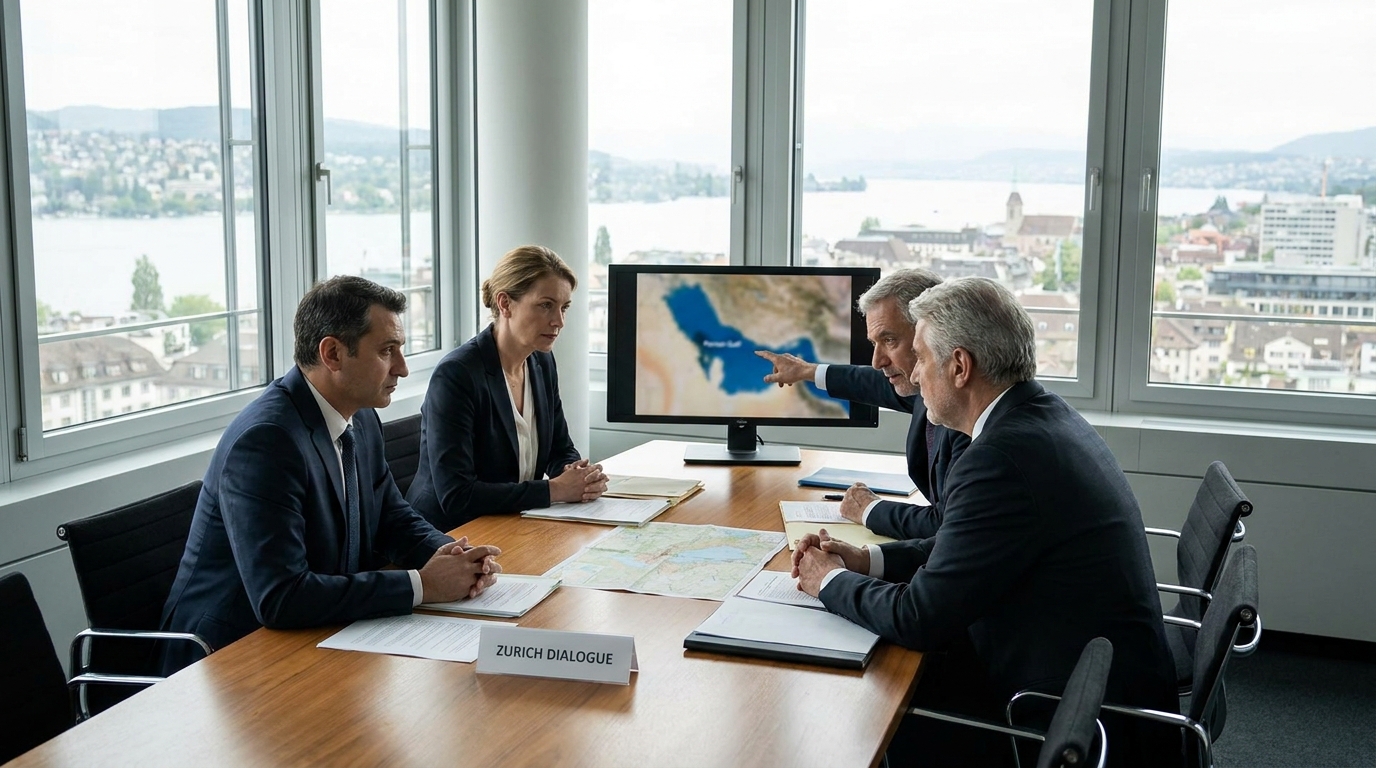
In a series of undisclosed, high-security sessions at the Bellevue Palace and private banking estates in Zurich, senior diplomats from France, Germany, and Switzerland are scrambling to construct a "neutral maritime corridor" system. The goal is to establish a strictly monitored, demilitarized transit route in the Gulf of Oman—one that can bypass both the hardline Iranian toll schemes and the crushing weight of the active American naval blockade.
1. The Zurich Conclave: European Economic Self-Preservation
The motivation behind Europe’s sudden, unilateral diplomatic sprint is simple: absolute economic panic.
The collapse of the June 17 peace accord has driven global Brent crude prices past historic thresholds. For European nations, this energy shock could not have arrived at a worse moment. Under the newly signed "Ankara Consensus," continental governments are already struggling to rewrite their domestic budgets to meet NATO’s aggressive 5% GDP defense spending mandate.
The combination of skyrocketing oil prices and massive rearmament costs is threatening to push debt-strapped Southern European economies—specifically Italy and Spain—into severe structural recessions.
By convening the Zurich Backchannel, European Union representatives are attempting to salvage their own economic security before the winter heating season begins. Led by veteran Swiss mediators and quietly backed by German Chancellor Friedrich Merz’s administration, the diplomats have established secure lines to moderate elements within Iran’s Ministry of Foreign Affairs, who are eager to find a way to bypass the absolute military blockade currently starving their domestic ports.
2. The "White Corridor" Blueprint
The technical core of the Zurich negotiations is the proposed establishment of the Hormuz White Corridors.
Under this proposed framework, Europe would establish a dedicated maritime zone monitored not by the United States, but by a coalition of neutral European and Asian maritime authorities:
- Demilitarized Transit Zones: The corridor would designate a narrow, highly specific deep-water lane through the Strait of Hormuz, strictly reserved for commercial food, medicine, and non-military energy transport.
- The Non-U.S. Inspection Protocol: To satisfy Washington’s demands that Iran does not receive illicit military cargo, ships entering the corridor would undergo strict, joint inspections at neutral ports like Salalah in Oman, bypassing American naval search teams.
- The Toll-Free Escrow Solution: To resolve the bitter "toll-free" dispute that blew up the original treaty, European diplomats have proposed a compromise: commercial shipping companies would pay a standardized transit fee, but the funds would not go directly to Tehran. Instead, the money would be held in secure, Swiss-managed escrow accounts, earmarked exclusively for humanitarian and agricultural imports from Europe and South America.
3. The Washington Cold Shoulder and Tehran's Internal Rift
While Zurich hums with diplomatic activity, the backchannel faces an immense uphill battle in both Washington and Tehran.
In the United States, the Trump administration has reacted to the European initiative with cold skepticism. White House officials have privately warned European capitals that any unilateral attempt to construct "neutral corridors" that bypass the active U.S. naval blockade will be viewed as a direct undermining of the administration's maximum pressure campaign.
American intelligence officials maintain that Iran's Revolutionary Guard Corps (IRGC) will simply use the "humanitarian" corridors to smuggle tactical missile components and drone parts to regional proxy networks.
In Tehran, the Zurich proposal has exposed a widening rift between the pragmatists and the military elite:
- The Pragmatic View: President Masoud Pezeshkian’s remaining diplomatic allies view the Swiss-mediated escrow system as the only viable lifeline left to prevent a complete collapse of the Iranian economy under the newly reinstated blockade.
- The Hardline Resistance: Senior IRGC commanders have fiercely rejected the concept of international inspections at Omani ports, framing the European plan as a soft-spoken surrender of Iranian maritime sovereignty over the Strait of Hormuz.
The Standoff Continues
The Zurich Backchannel represents Europe’s desperate attempt to assert "strategic autonomy" in a crisis that threatens to burn its own economic house down. But as commercial shipping lanes remain highly dangerous and American warships continue to circle the Gulf, the window for a diplomatic compromise is rapidly closing.
If European diplomats cannot convince a skeptical White House to tolerate the "White Corridor" blueprint—or force Tehran's hardline military factions to accept external inspections—the shadow talks in Switzerland will go down as a footnote in the march toward a much larger, global conflict.