Category: Global politics || Posted Jul 17, 2026
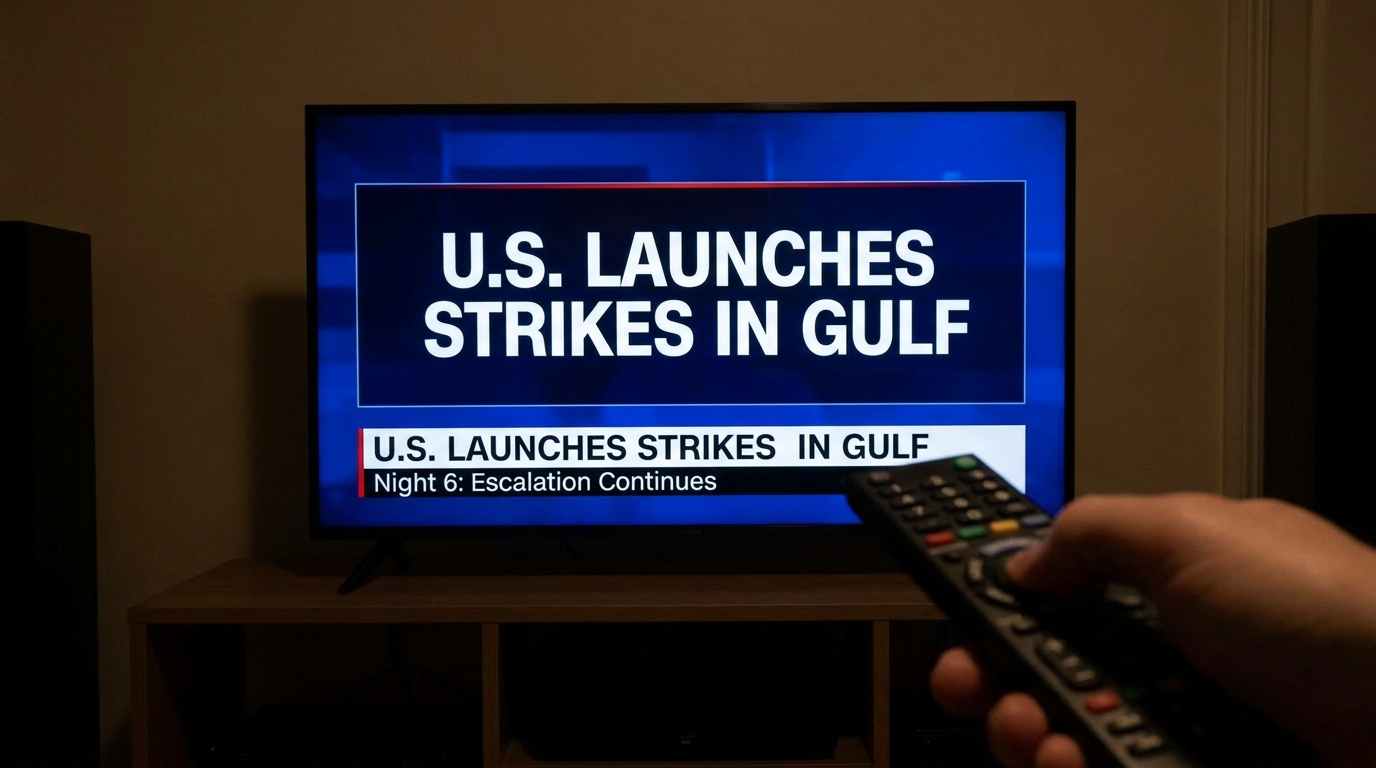
U.S. Forces Launch New Strikes Against Iran for Sixth Consecutive Night After Escalation in the Gulf
The situation in the Persian Gulf has officially spiraled into a high-stakes, direct military confrontation. The tentative June ceasefire mediated by Pakistan has completely collapsed, and U.S. Central Command (CENTCOM) has launched its sixth consecutive night of air strikes against Iranian targets.
What started as a localized dispute over shipping lanes has transformed into a sweeping kinetic campaign.

According to CENTCOM, the latest round of precision strikes was launched on Thursday, July 16, 2026, to "further degrade Iranian military capabilities". Fighter jets, armed drones, and warships targeted coastal surveillance arrays, air defense sites, and military logistics pipelines across the country.
The Geographical Expansion
For the first time in this current cycle of violence, the geographic scope of U.S. strikes has expanded dramatically beyond southern coastal facilities:
- The Capital & Northern Iran: U.S. weapons struck targets in Tehran and Semnan province, the latter of which is a known hub for Iran’s ballistic missile and space programs.
- The Western Provinces: Local officials confirmed strikes in the Veysian district of Lorestan province.
- The Southern Coast & Logistics: Strikes continued to hammer Hormozgan province, targeting Qeshm Island, Chabahar, and the vital port city of Bandar Abbas.
Heavy Toll on Southern Infrastructure
The physical toll of the bombardment on Iran's transit infrastructure has been severe.
- A key road bridge near Bandar-e Khamir collapsed into the Shur River after being directly hit, reportedly killing seven people and injuring several others.
- The Kehvarstan Bridge and a critical railway junction in Bandar Abbas were also struck, severely restricting the land movement of goods and military equipment.
- In the southwestern city of Ahvaz, adjacent strikes caused enough panic and local damage to force the emergency evacuation of more than 200 pediatric cancer patients from a local hospital.
Iranian state media reports that the six-day campaign has left over 35 people dead and more than 300 wounded.
The "Steel Wall" Blockade
At the heart of this escalation is a battle for control of maritime trade. The U.S. has reinstated what it calls a "steel wall" naval blockade in the Gulf of Oman, halting vessels trying to transport oil and goods to or from Iranian ports.
The White House stated that the strikes and blockade were initiated because Iran violated the previous agreement by attacking commercial shipping vessels in the Strait of Hormuz. CENTCOM forces intercepted three commercial ships trying to run the blockade, redirecting two and disabling a third that refused to comply.
Iran's Retaliation and Regional Panic
Iran has not taken the strikes passively, declaring the Strait of Hormuz an "unbreakable red line". The Iranian military has launched a wave of retaliatory drone and missile strikes against regional countries hosting U.S. assets:
- Direct Hits: Drone and missile attacks targeted military facilities in Bahrain, Kuwait, and Jordan.
- Regional Alarm: Kuwait activated emergency defense protocols, Bahrain sounded air raid sirens, and Qatar reported intercepting a projectile near Doha.
- The Ultimatum: Iran's Khatam al-Anbiya Central Headquarters warned that if the U.S. targets civilian infrastructure like power plants, Iranian forces will unleash "crushing" retaliatory strikes on all Western-aligned infrastructure across the entire Middle East.
This is a fast-developing crisis with major global energy implications, as oil markets watch the Strait of Hormuz—the choke point for a fifth of the world's oil supply—teeter on the edge of a full-scale war.