Category: Global politics || Posted Jul 17, 2026
World Bank Group and Partners Welcome N’Djamena Declaration to Accelerate Water Security, Growth, and Jobs Across Africa
Imagine living in a community where water isn’t just a basic utility, but a daily, high-stakes calculation. That is the reality for more than 400 million people across Africa today. It is a crisis that stunts economic growth, impacts public health, and is aggressively worsened by climate change, which threatens to wipe out up to 12% of some regional GDPs by 2050.
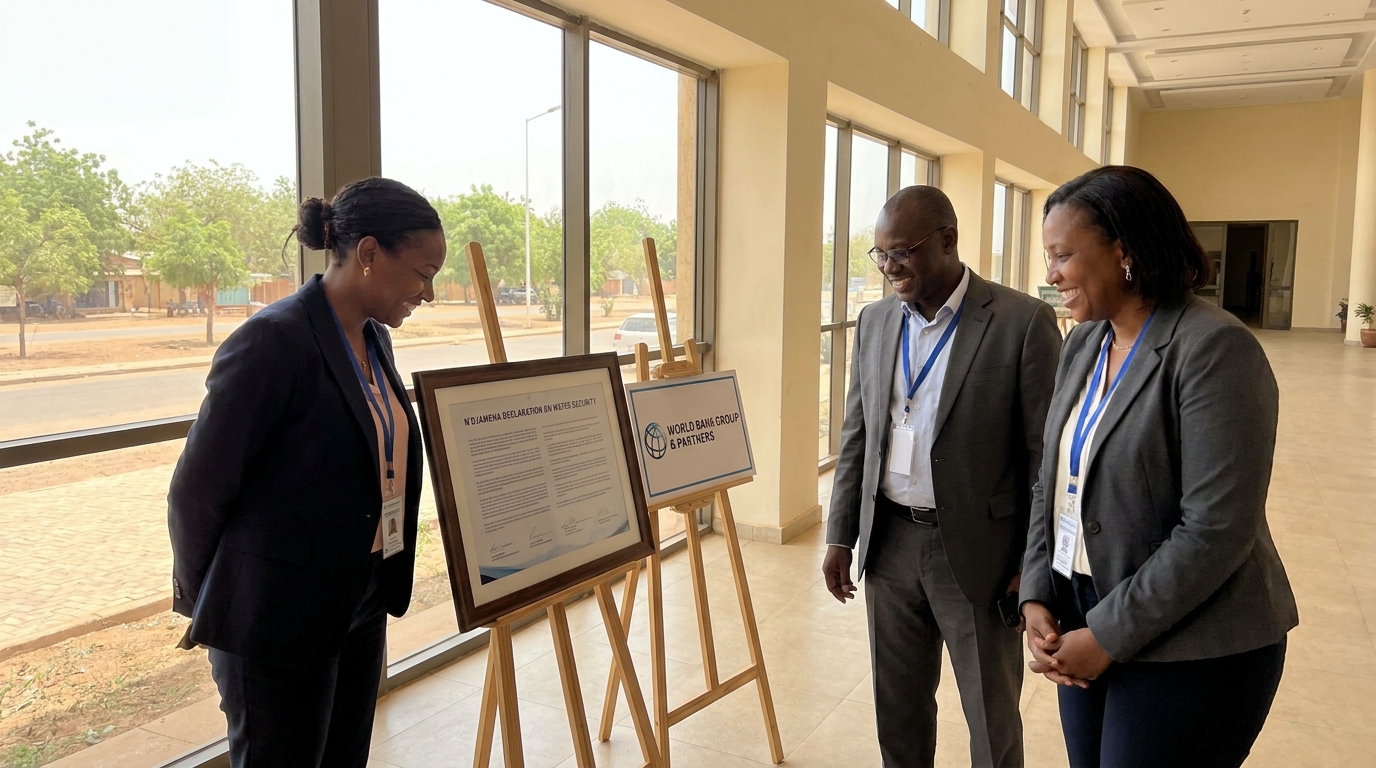
But a massive structural pivot is underway. At the inaugural African Water Forum in Chad, 14 African nations and 6 regional organizations officially signed the landmark N’Djamena Declaration on Water.
Co-organized by the Chadian government and the World Bank Group under the banner "From Vision to Action," this declaration isn't just another dry policy paper. It is a legally grounded, multi-billion-dollar framework designed to place water security at the absolute center of Africa’s economic transformation, job creation, and climate resilience.
The Four Pillars of the Declaration
The signatories—including heads of state from Chad, Benin, Gabon, Mauritania, and the Democratic Republic of the Congo—have committed to shifting water from a neglected public sector into a high-performance economic asset. The N'Djamena Declaration breaks this down into four clear, immediate priorities:
- Water for People: Rapidly expanding universal access to safe, clean drinking water and modern sanitation systems.
- Water for Food Infrastructure: Securing and scaling up water resources for agricultural food systems to shield local populations from droughts and famine.
- Ecosystem Protection: Actively defending fragile transboundary river basins and natural water ecosystems from pollution and land degradation.
- Economic & Urban Growth: Using resilient water infrastructure as a direct engine to build jobs, stabilize rapid urbanization, and create shared prosperity.
Moving Beyond "Just Building Wells"
One of the most refreshing aspects of the N'Djamena summit was the brutal honesty from African leadership regarding historical failures. Rather than just celebrating the construction of new infrastructure, Chadian Finance Minister Tahir Hamid Nguilin highlighted a problem that has plagued development for decades: maintenance leakage.
"It is not enough to build... we must also maintain, protect, and sustainably manage the resources and infrastructure created," Nguilin stated bluntly. "An abandoned or poorly maintained structure is a broken promise; a functional well... is, on the contrary, a promise kept."
To turn this philosophy into financeable projects, countries are launching National Water Compacts. These compacts serve as national pacts that align public reforms, dictate clear financial goals, and create viable avenues for private investment. Four nations—Chad, The Gambia, Guinea, and Togo—officially launched their compacts during the forum.
Chad leading by example, unveiled a $3.8 billion five-year roadmap to boost clean water access to 80% by 2030, immediately backed by a fresh $160 million grant from the World Bank's International Development Association (IDA) to fund local resilience and protect vulnerable host and refugee populations. An additional $50 million was also injected into the Regional Sahel Pastoralism Support Project II (PRAPS II) to protect transhumant herding communities struggling with shifting seasonal rains.
Aligning with the "Water Forward" Coalition
The N'Djamena Declaration doesn't operate in a vacuum; it acts as the primary African engine for Water Forward. Launched by the World Bank, Water Forward is an ambitious global coalition that pools the resources of 10 major multilateral development banks.
By unifying these massive financial institutions rather than dispersing their efforts, the initiative aims to bring clean water security to over one billion people globally by 2030. The strategy relies heavily on improving the financial viability of local water operators, making the entire sector attractive enough to pull in heavy volumes of commercial private capital.
A Broader Vision for African Unity
The forum also yielded an unexpected, historic milestone for continental integration. In his opening address, Chadian President Mahamat Idriss Déby Itno used the spirit of collective action at the Water Forum to announce that Chad will completely abolish entry visas for all African citizens starting January 1, 2027. It’s a bold move that underscores the summit's core lesson: whether dealing with shared river basins or economic borders, Africa’s modern challenges can only be solved through radical cooperation.
The signing of the N'Djamena Declaration signals that Africa's leadership is done relying on vague visions. By restructuring institutions, holding themselves accountable to performance-based infrastructure metrics, and unlocking billions in blended finance, these partners are laying down the literal pipelines for a more resilient, job-rich, and water-secure future.