Category: Crypto Opportunities || Posted Jul 17, 2026
Marex Partners With Coinbase to Allow Clients to Use USDC as Margin Collateral for Regulated Derivatives
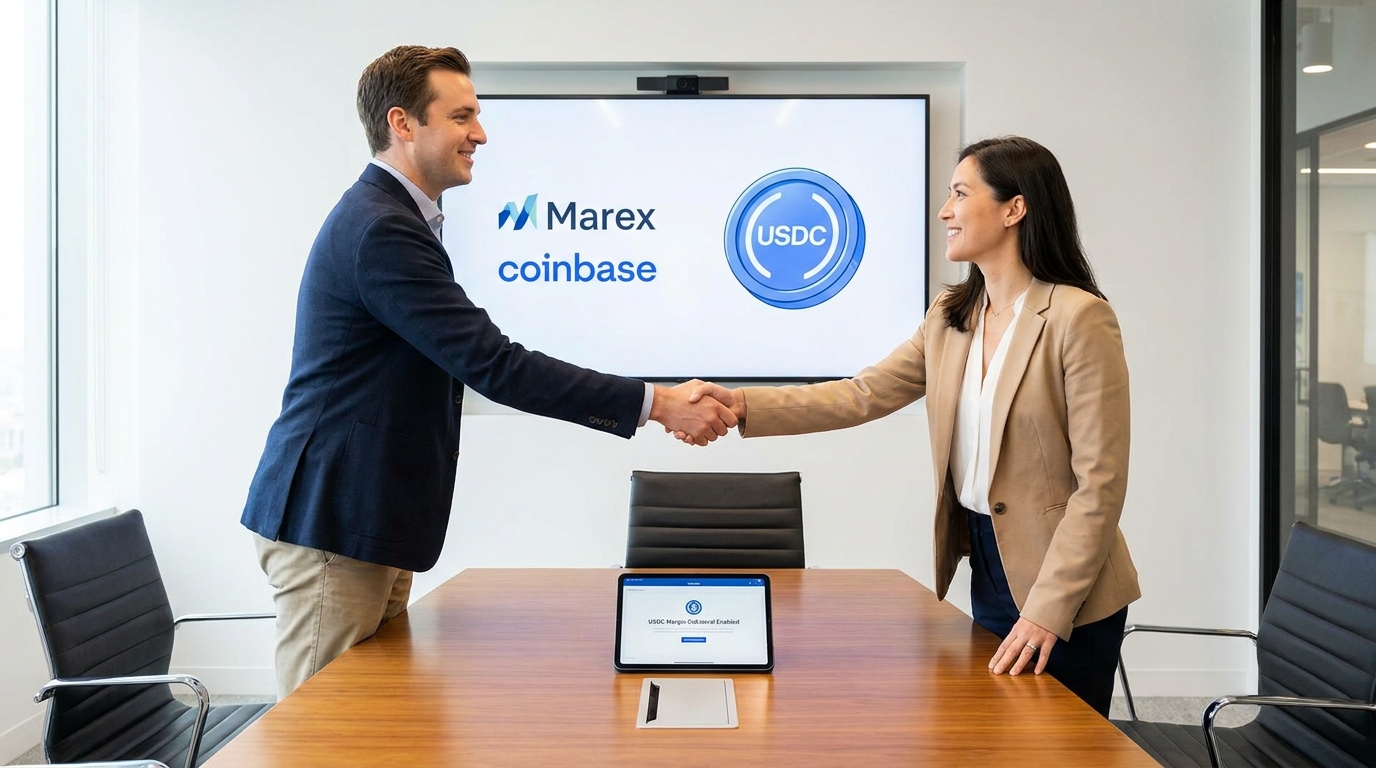
In a major milestone for the convergence of traditional finance (TradFi) and digital assets, global financial services platform Marex Group has officially launched a service allowing institutional clients to use USDC as initial margin (IM) collateral for regulated derivatives clearing.
This cutting-edge workflow is powered by Coinbase Prime, which provides the critical custody, liquidity, and reporting infrastructure underneath. The move represents a massive leap forward for institutional capital efficiency, allowing market participants to secure CFTC-regulated derivatives contracts with the speed and flexibility of blockchain-native assets.
The Catalyst: A Regulatory Green Light
While utilizing stablecoins as collateral has long been talked about, this integration was made possible by key regulatory progress.
In December 2025, the U.S. Commodity Futures Trading Commission (CFTC) issued a landmark no-action letter regarding the use of digital assets as collateral. Under this guidance, Futures Commission Merchants (FCMs) like Marex are permitted to accept non-security digital assets—specifically including USDC, Bitcoin, and Ethereum—as customer margin collateral for CFTC-regulated derivatives, subject to strict risk calculations and compliance conditions.
This regulatory bridge gave Marex the green light to take stablecoin collateral from concept into live production. For its inaugural transaction, Marex accepted USDC as initial margin from institutional trading firm Prime Trading LLC, with Coinbase handling custody and settlement before cash was delivered to fund the positions.
Why Stablecoin Collateral is a Game-Changer
In traditional finance, clearing is governed by the rigid hours of the banking system. If a market experiences extreme volatility on a Friday evening, an institution might find themselves unable to move traditional fiat collateral to cover margin calls until Monday morning.
Stablecoins solve this friction completely by bringing always-on, internet-speed mobility to the institutional clearing process:
- 24/7 Liquidity Management: Because blockchain-native rails never close, institutional clients can manage risk, meet margin requirements, and move collateral in near-real-time—even on weekends and holidays.
- Capital Efficiency: Instead of keeping excess cash or low-yielding Treasury bills sitting idle in traditional bank accounts just in case of a margin call, firms can deploy their active digital asset portfolios much more dynamically.
- Rapid Risk Mitigation: During major geopolitical or market-moving events, the ability to rapidly shift collateral allows firms to secure their positions and prevent forced liquidations.
Under the Hood: Coinbase’s Institutional Engine
To satisfy the demanding reporting and safety requirements of traditional clearinghouses like the CME, Marex leveraged Coinbase’s bespoke institutional suite. Coinbase provides the foundational plumbing for the workflow:
- Qualified Custody: The USDC collateral is held securely under NYDFS-qualified custody.
- Instant Conversion: The platform supports instant 1:1 fiat-to-USDC conversion around the clock, removing any operational dependencies on banking hours.
- Clearinghouse-Grade Reporting: Coinbase engineered custom daily reporting and reconciliation infrastructure built specifically to align with CFTC and CME clearing standards.
Looking Ahead: The Future of Tokenized Assets
The launch of USDC margin clearing by Marex and Coinbase is highly likely to serve as a blueprint for the wider industry. As regulatory frameworks mature and tokenized real-world assets (RWAs) gain traction, the line between crypto infrastructure and legacy financial systems will continue to blur.
For institutional desks, the ability to post fully reserved, dollar-denominated stablecoins like USDC as margin is no longer just an experimental trial—it is actively becoming a standard, highly efficient tool for modern risk management.