Category: Global politics || Posted Jul 18, 2026
Iran's Guards Say Two Oil Tankers Explode After Hitting Mines in Hormuz, U.S. Disputes Claim
Tensions in the Middle East have reached a dangerous new flashpoint as Iran and the United States trade conflicting narratives over a massive incident in the world's most critical maritime chokepoint.
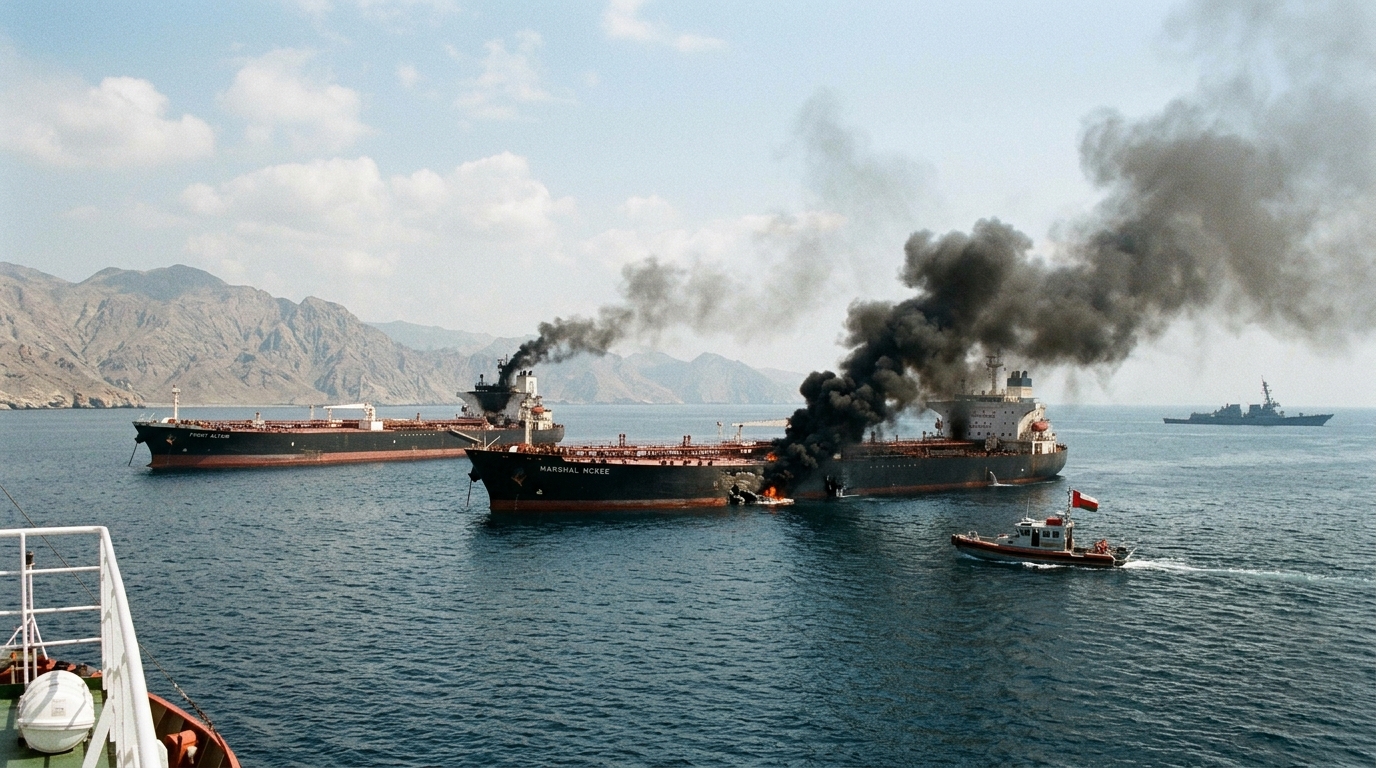
Iran’s Islamic Revolutionary Guard Corps (IRGC) announced that two commercial oil tankers exploded and caught fire after striking sea mines in the southern corridors of the Strait of Hormuz. The U.S. military, however, has flatly rejected the claim, calling it a fabrication.
Here is a breakdown of what both sides are saying and how this fits into the rapidly expanding conflict.
The Conflicting Claims
The Iranian Narrative
According to a statement carried by Iran’s state news agency, IRNA, the IRGC claims that "deceptive American intelligence agencies" guided two unidentified tankers into a active minefield south of the strait, triggering the explosions.
In tandem with the alleged explosions, the IRGC announced it successfully "stopped" four other vessels in the area during a combined drone and missile operation, accusing the ships of violating maritime directives with the backing of the U.S. military.
The U.S. Denial
U.S. Central Command (CENTCOM) wasted no time dismissing the reports. In a direct statement published on X, CENTCOM stated:
"Like most IRGC claims, this is false."
Washington views the claim as a piece of wartime misinformation designed to project control over the waterway and spook international energy markets.
The Broader Context: A Week of Heavy Strikes
This maritime dispute isn't happening in a vacuum. It coincides with the seventh consecutive night of heavy U.S. airstrikes hitting mainland Iran.
- U.S. Operations: CENTCOM confirmed that American forces are running nightly sorties designed to systematically degrade Iran’s coastal surveillance networks, radar sites, and military infrastructure. This includes the recent destruction of a key IRGC surveillance tower at Shahid Kalantari Port in Chabahar.
- Iran's Retaliation: In response to what it calls U.S. attacks on civilian infrastructure—including bridges and railway stations—Tehran has widened its target net. The IRGC has launched drones and missiles aimed at U.S. military installations and assets hosted across Qatar, Kuwait, Jordan, Oman, and Syria.
- The Shipping Squeeze: As a result of the fighting and an enforced U.S. naval blockade of Iranian ports, commercial traffic through the Strait of Hormuz has plummeted to a three-week low.
With Major General Mohsen Rezaei, a senior advisor to Iran's supreme leader, threatening "full-scale offensive operations" if U.S. strikes continue for another 48 to 72 hours, the risk to the one-fifth of global oil shipments passing through these lanes remains incredibly high.