Category: Global politics || Posted Jul 20, 2026
Canada Implements New Temporary Border Measures for DRC Foreign Nationals in Response to Ebola Outbreak
Breaking Down Canada’s New Ebola Travel Restrictions for DRC Nationals
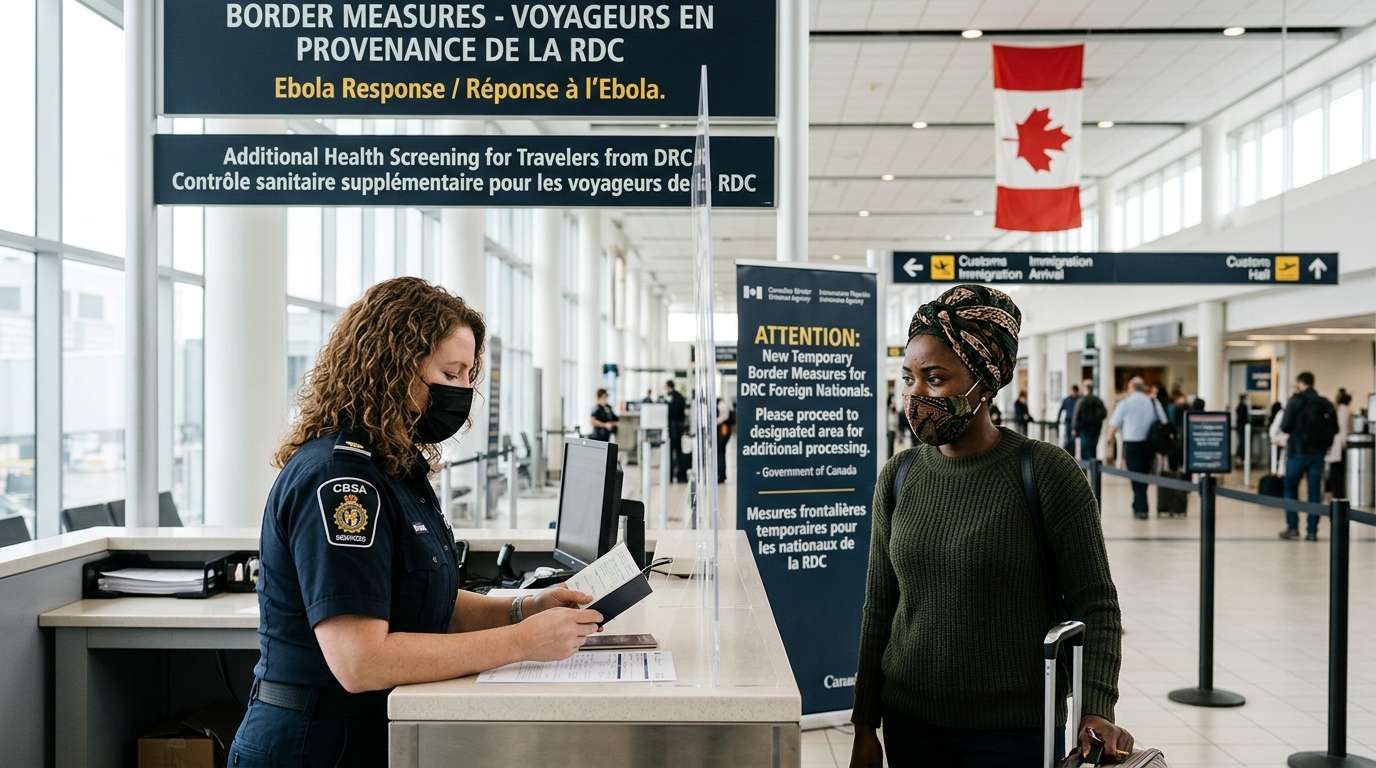
If you’ve been tracking international travel updates, a major shift is happening right now. Starting tonight—July 20, 2026, at 11:59 p.m. EDT—the Government of Canada is officially tightening its borders. In a bid to stop a rapidly moving Ebola outbreak from making its way onto Canadian soil, foreign nationals who have been in the Democratic Republic of the Congo (DRC) within the past 21 days are temporarily prohibited from entering the country.
This isn't an entirely sudden pivot, but rather a steep escalation of precautions that have been building since late May. Let's break down exactly what these temporary measures mean, who they impact, and the science driving the decision.
What the New Measures Actually Entail
Up until today, Canada was operating under a May 2026 directive that required travelers from Ebola-affected regions to undergo strict mandatory health screenings and self-isolate upon arrival. Tonight’s updated border measure shifts the strategy significantly:
- A Solid Travel Restriction: Foreign nationals who have stepped foot in the DRC within the last 21 days cannot enter Canada, even if they hold a previously approved visa, electronic travel authorization (eTA), or permit.
- Enforcement at the Gate: Under an Interim Order through the Aeronautics Act, airlines are legally required to deny boarding to any foreign national trying to fly to Canada if they have been in the DRC within that 21-day window.
- Frozen Paperwork: Immigration, Refugees and Citizenship Canada (IRCC) is temporarily pausing the finalization of new and existing visa applications for residents in the affected region. Applicants are actively being advised not to send their physical passports to Visa Application Centres (VACs) for the time being.
Who is exempt? Canadian citizens, permanent residents, and individuals registered under the Indian Act are entirely exempt from the travel ban. However, if they have been in the DRC, Uganda, or South Sudan recently, they must still undergo a rigorous health screening at the airport and undergo a mandatory 21-day quarantine.
Why Now? Understanding the Outbreak Reality
While the Public Health Agency of Canada (PHAC) reiterates that the day-to-day risk to Canadians remains low, the aggressive trajectory of this specific outbreak has health officials on high alert.
This marks the third-largest Ebola outbreak on record, and its transmission patterns are uniquely challenging. Health data indicates 2,181 confirmed cases and 864 deaths. More alarmingly, case numbers are currently doubling every 21 days. What is especially concerning to epidemiologists is that more than 80 percent of recent cases have been detected completely outside of established contact lists, meaning the virus is spreading silently through communities without clear tracing lines.
To understand why this virus warrants such a massive logistics response at international borders, it helps to look at how it operates on a cellular level.

When analyzing the structure of the Ebola virion above, pay close attention to the yellow Glycoprotein (GP) spikes protruding from its outer membrane. These spikes function like a molecular key, allowing the virus to attach to and penetrate human cells. Because the virus replicates rapidly once inside and is transmitted through direct contact with infected bodily fluids, preventing early border introduction is vital to keeping domestic containment systems from being overwhelmed.
The Travel Ban Debate: A Delicate Balance
Canada’s choice to bar foreign nationals mirrors similar border closures enacted recently by the United States and Mexico. However, the decision has highlighted a classic friction point in global health policy.
The World Health Organization (WHO) traditionally advises against strict travel and trade bans during outbreaks. The WHO’s stance is that broad restrictions inadvertently fuel social stigma and can devastate local economies, which ironically makes epidemics harder to control by discouraging transparent reporting.
Canada's counter-argument rests on sustainability. Approximately 40 percent of the weekly travelers arriving from the affected regions are foreign nationals. By narrowing entry specifically to returning citizens, residents, and essential medical workers, border officials aim to keep the dedicated quarantine and screening infrastructure at major hubs like Toronto, Montreal, and Vancouver operating smoothly and effectively.
These emergency measures are currently slated to remain in place until August 29, 2026, though public health officials will continue to evaluate the outbreak data weekly to determine if they need to be extended or adjusted.