Category: Global politics || Posted Jul 19, 2026
Syria International Textile Exhibition Launches in Damascus as Catalyst for Economic Reconstruction and Job Creation
Threads of Rebirth: How NasTex 2026 is Weaving Syria’s Economic Future
There is something uniquely symbolic about textiles in the Middle East. For centuries, Syrian fabrics, specialized damask silk, and home furnishings weren’t just products—they were woven directly into the cultural and economic fabric of the region.
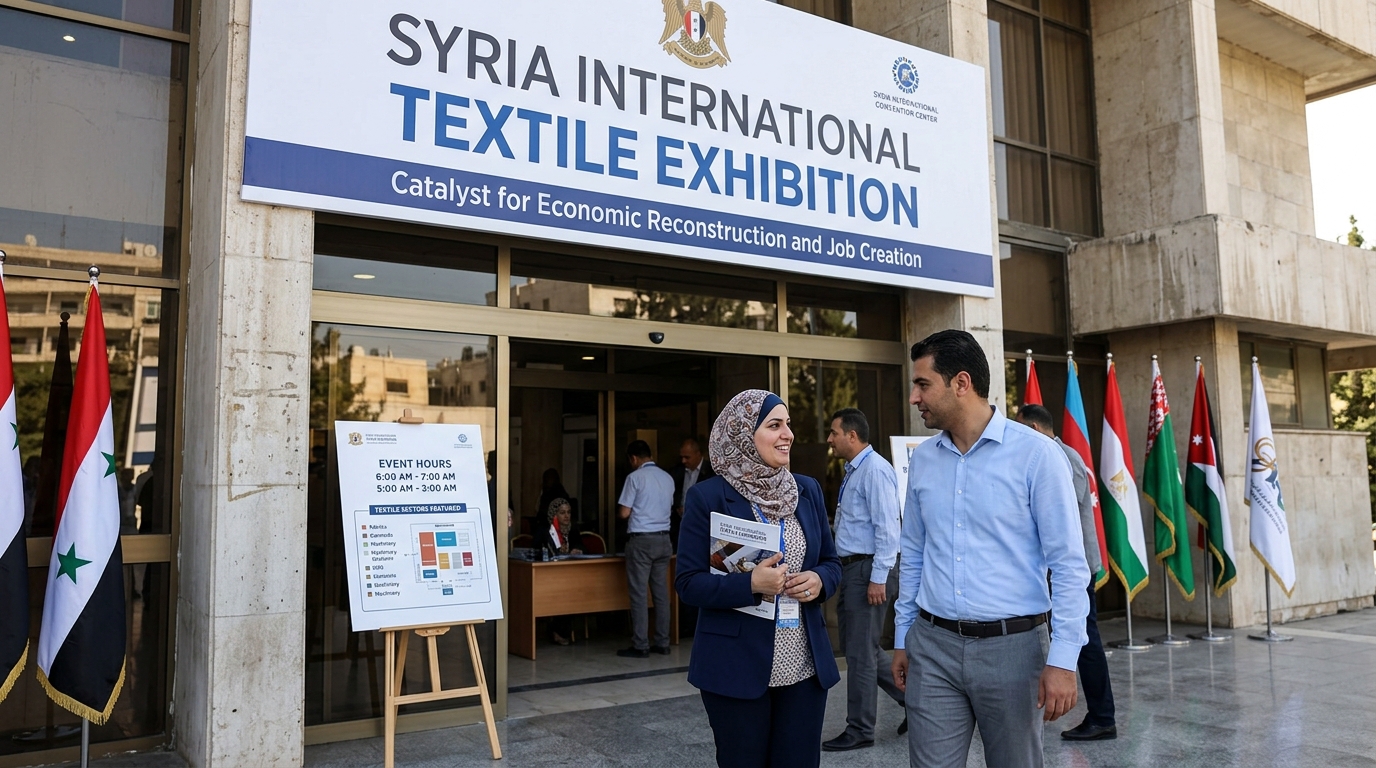
This weekend in Damascus, that heritage took center stage as the first Syria International Textile Exhibition (NasTex 2026) officially launched. Running from July 18 to 21, 2026, at the Conference Palace and Damascus Fairgrounds, the event is shaping up to be far more than a simple trade show. Instead, it is being championed as a vital catalyst for the country’s ongoing economic reconstruction and an engine for structural job creation.
The Scale of NasTex 2026
The sheer size of the exhibition signals a serious push to reclaim a spot on the regional trade stage. The event spans an enormous 150,000 square meters and has brought together more than 300 exhibitors from over 25 Arab and foreign countries.
International delegations, local craftspeople, and industrial buyers are navigating a massive showcase that covers the entire lifecycle of manufacturing:
- Raw Materials & Yarns: Re-establishing the foundational supply chains that local factories rely on.
- Finished Goods & Furnishings: Showcasing the unique aesthetics, garments, and textures traditional to Syrian artisans.
- Industrial Machinery & Innovation: Introducing next-generation digital transformation solutions and automated weaving setups to revitalize aging infrastructure.
A Catalyst for Reconstruction and Jobs
Inaugurated by President Ahmed al-Sharaa, the exhibition aims to tackle immediate socio-economic challenges by breathing life back into a historically lucrative industry.
"Reviving the textile industry contributes to rebuilding Syria's present day by drawing on the industrial and artisanal heritage for which the country has long been known. It is a creative starting point for confronting poverty, supporting reconstruction, and providing thousands of jobs." — President Ahmed al-Sharaa at the opening ceremony.
Because the textile sector historically served as a cornerstone of the national economy, reviving it creates an immediate domino effect. By connecting local manufacturers directly with foreign investors and new export markets, the event is laying the groundwork for sustainable manufacturing jobs. For thousands of families, this means the promise of long-term economic security and steady employment as the country transitions into a phase of deliberate rebuilding.
Global Tech Meets Local Heritage
One of the most notable dynamics at the expo is the return of major international industrial players. For instance, Italy’s Itema Group, a global heavyweight in advanced weaving technology, has formally returned to the Syrian market at NasTex 2026, showcasing high-performance weaving solutions specifically optimized for denim, silk, and terry fabrics.
This combination of cutting-edge global technology and deeply rooted local craftsmanship is exactly what the "Made in Syria" label needs to regain its competitive edge. By integrating high-efficiency, automated machinery, local producers can scale up their output, lower operating costs, and meet modern international standards.
The Bottom Line
As Damascus plays host to international trade brokers and supply chain experts this week, the mood on the ground is one of practical, hard-nosed optimism. True economic reconstruction takes more than just policy—it requires physical production, open trade gates, and stable workplaces. NasTex 2026 is a concrete, tangible step toward proving that Syria’s industrial heart is beating again, ready to restore its legacy as a regional powerhouse of trade and textile excellence.