Category: Security & Regulation || Posted Jul 23, 2026
U.S. Senate Prepares Floor Vote on Comprehensive Bipartisan Crypto Bill Ahead of August Recess
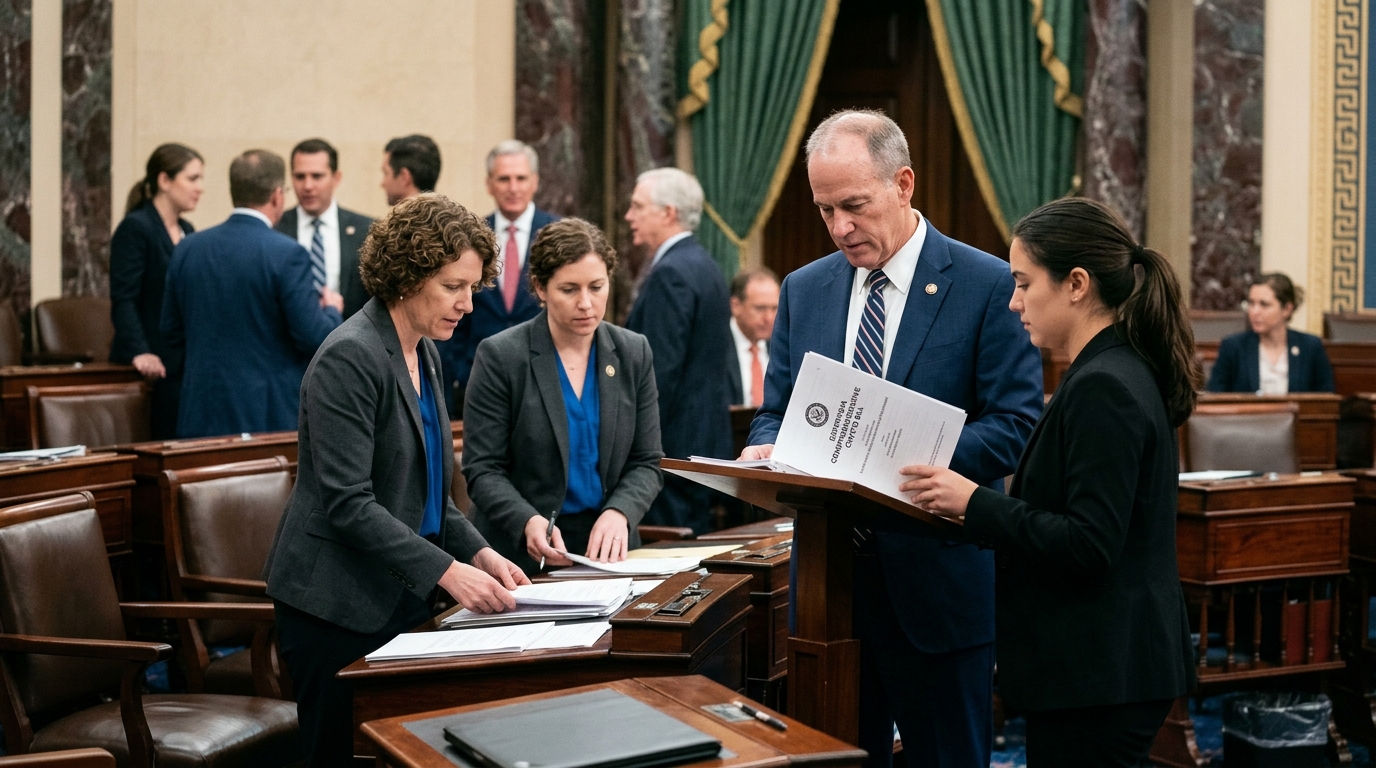
Washington is facing down a ticking clock. As the Senate prepares to adjourn for its annual August recess, lawmakers are pushing to deliver what could be the most monumental shift in federal financial oversight in a generation: a full floor vote on the Digital Asset Market CLARITY Act (H.R. 3633).
After years of intense lobbying, jurisdictional tussles, and committee markups, the bipartisan market structure legislation sits directly on the Senate calendar. With industry leaders calling for an immediate vote and negotiators racing to resolve last-minute ethics and stablecoin provisions, the coming days will determine whether the U.S. establishes a permanent crypto regulatory framework or pushes the issue into the high-stakes 2026 midterm cycle.
1. What the CLARITY Act Changes
For over a decade, digital asset firms operating in the United States have navigated an environment dominated by "regulation by enforcement". The CLARITY Act replaces that ad-hoc approach with a statutory framework, drawing explicit boundaries for federal agency jurisdiction:
- CFTC vs. SEC Jurisdictional Split: The bill draws a clear line between securities and commodities. Decentralized networks and digital commodities fall under the primary oversight of the Commodity Futures Trading Commission (CFTC), while capital-raising tokens and investment contracts remain within the purview of the Securities and Exchange Commission (SEC).
- Developer and DeFi Safeguards: In a major win for Web3 builders, the legislation focuses regulatory scrutiny on centralized intermediaries that control user funds, explicitly shielding open-source code writers and peer-to-peer protocols from broker-dealer requirements.
- National Security & Illicit Finance Standards: Centralized exchanges and intermediaries will be bound by standardized Anti-Money Laundering (AML) and sanctions compliance rules, aimed at closing loopholes while keeping legitimate digital commerce onshore.
2. Breaking the Last-Minute Sticking Points
While the Senate Banking Committee advanced the legislation with a strong 15-9 bipartisan vote earlier this summer, floor action was briefly frozen over lingering political and structural questions.
To salvage the bill's momentum ahead of the August deadline, lead negotiator Sen. Cynthia Lummis (R-Wyo.) released updated compromise text to resolve the remaining hurdles:
Executive Ethics & Conflict Rules
A major sticking point raised by Democratic senators centered on public officials—and their immediate families—holding or launching commercial digital asset projects. The updated text introduces strict ethical provisions, explicitly banning high-ranking federal officials, including the President, from issuing or sponsoring profit-generating digital assets while in office.
Yield vs. Bank Deposits
Negotiations between crypto yield platforms and traditional banking lobbies reached a compromise regarding stablecoin reward structures. Under modified provisions championed by Sen. Thom Tillis (R-N.C.), rules differentiate activity-based crypto rewards from conventional interest-bearing bank deposits, keeping yield mechanisms active without triggering depository banking penalties.
3. High Stakes Ahead of the August Recess
The urgency in Capitol Hill corridors stems from the calendar. If Senate Leadership does not bring H.R. 3633 to the floor before lawmakers depart Washington for the August break, the window for passing comprehensive legislation before the 2026 midterms narrows dramatically.
"We did not come this far to quit at the 5-yard line. Consumer protection and pro-innovation policy aren't opposites — this bill proves it."
— Sen. Cynthia Lummis (R-Wyo.)
Industry figures, including Coinbase CEO Brian Armstrong, have publicly confirmed that the compromise text represents thousands of hours of negotiation across both chambers and political parties.
The Bottom Line
A successful floor vote in the Senate would send the reconciled CLARITY Act to the President's desk, effectively ending years of regulatory ambiguity for digital assets in the United States.
For institutional investors, developers, and everyday users, the coming days will decide whether the U.S. establishes a modern framework for digital asset markets or faces another extended cycle of regulatory uncertainty.
This video provides an breakdown of the Digital Asset Market CLARITY Act's passage through committee, detailing the timeline leading to the full floor vote and explaining how the SEC vs. CFTC split impacts investors.