Category: Global politics || Posted Jul 23, 2026
World Bank Group Supports Zambia–Malawi Interconnector Project to Boost Regional Power Trade
Connecting Grids, Powering Futures: World Bank Backs $43M Zambia–Malawi Power Interconnector
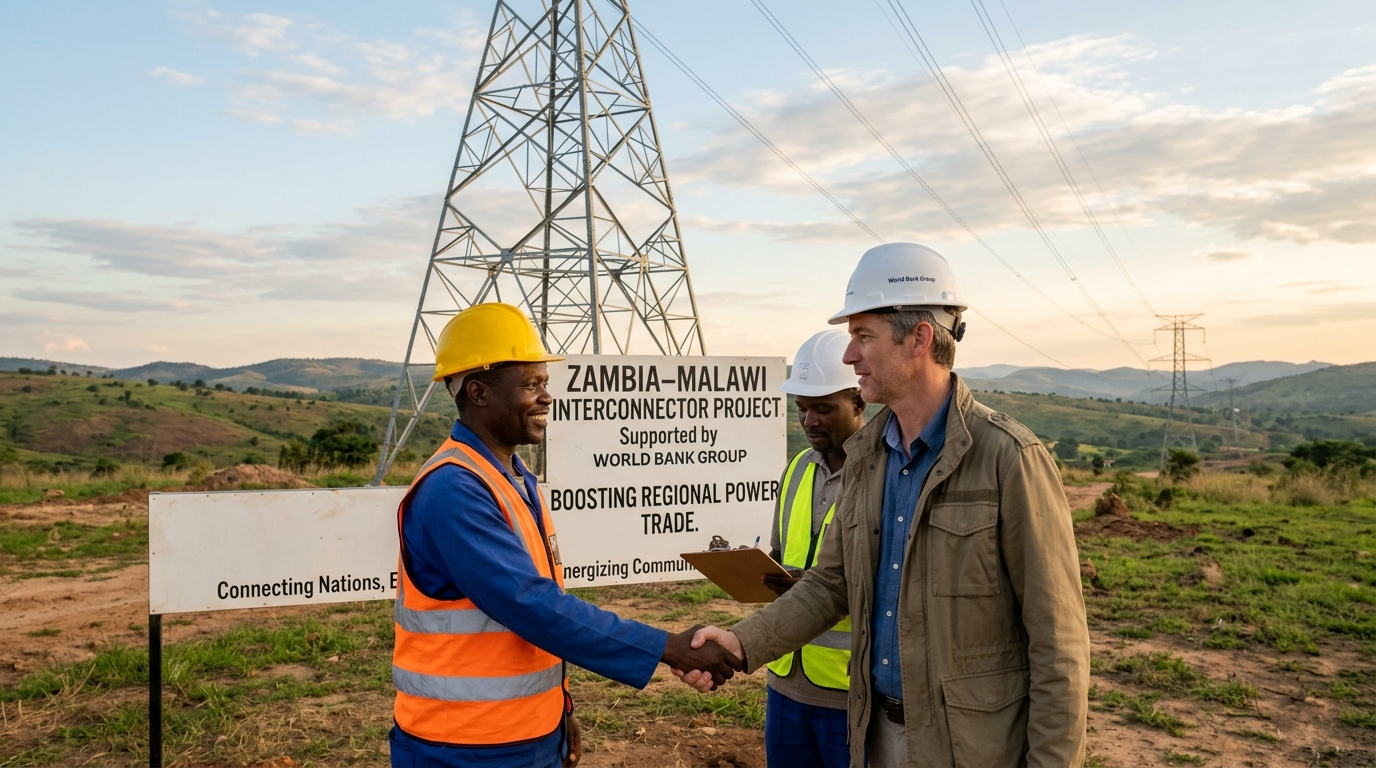
Southern Africa’s journey toward regional energy security and economic integration took a major step forward today. The World Bank Group officially announced a $43 million International Development Association (IDA) grant to finance the Zambia–Malawi Interconnector Project.
The grant directly supports the construction of a 47-kilometer transmission line in Zambia, forming a critical link in the broader 192.6-kilometer, 400 kV Malawi–Zambia Interconnector corridor. Once complete, this high-voltage highway will physically tie the power grids of both nations together, unlocking seamless cross-border electricity trade and bolstering grid reliability across the region.
Why Cross-Border Power Trade Matters Right Now
For years, Southern Africa’s energy landscape has suffered from a stark structural imbalance: localized power surpluses in a few areas, paired with severe generation deficits and low electrification rates in others.
The severe 2024 El Niño-induced drought exposed just how fragile hydro-dependent national grids can be when operating in isolation. By connecting Zambia and Malawi, the project introduces vital structural resilience:
- Climate Risk Diversification: Zambia and Malawi draw water from distinct river basins. Because hydrological stress rarely hits both basins simultaneously with the same intensity, interconnected transmission allows countries to trade power and offset local drought impacts.
- Regional Market Integration: The corridor opens a vital energy trading channel between the Southern African Power Pool (SAPP) and the Eastern Africa Power Pool (EAPP), giving both nations access to broader, more cost-effective clean energy markets.
- Advancing "Mission 300": The project directly underpins both countries' National Energy Compacts under Mission 300—an initiative led by the World Bank Group and the African Development Bank to bring electricity to 300 million people across Sub-Saharan Africa by 2030.
Project Snapshot
| Parameter | Project Details |
| Financing Structure | $43 Million IDA Grant (World Bank Group) |
| Physical Scope | ~47 km in Zambia completing the 192.6 km, 400 kV cross-border line |
| Strategic Program | RETRADE-SA (Regional Energy Transmission, Trade and Decarbonization in Southern Africa) |
| Key Objectives | Enhance grid stability, expand clean power trade, and drive industrial development |
Fueling Economic Corridors & Critical Minerals
This project isn't just about lighting homes—it is a core economic engine for industrial development across Southern Africa:
1. Powering the Lobito Corridor
The interconnection will help supply electricity demand along the Lobito Corridor—the strategic trade route linking Angola’s Port of Lobito to the mining heartlands of DRC and Zambia. Electricity demand along the corridor is projected to reach nearly 1,000 MW over the medium term to support rail electrification, special economic zones, and mineral processing.
2. Supporting Malawi's Energy & Mining Ambitions
For Malawi, direct access to Zambia’s regional grid provides an anchor off-take pathway for major clean energy generation projects (such as the Mpatamanga Hydropower Storage Project) while powering the country's expanding energy transition minerals roadmap.
"Expanding access to reliable, affordable electricity across Southern Africa requires countries to work together. The region's energy challenge is too large and too interconnected to be solved in isolation."
— Yadviga Semikolenova, World Bank Energy Practice Manager for Eastern and Southern Africa
What Lies Ahead
Implemented under the broader RETRADE-SA framework, this project establishes both the physical infrastructure and the regulatory frameworks needed for sustained, market-based power trading between ZESCO and ESCOM. By turning public seed financing into bankable, regional infrastructure, the Zambia–Malawi Interconnector marks a decisive step toward a fully integrated, climate-smart power market in Southern Africa.