Category: Global politics || Posted Jul 24, 2026
U.S. Military Completes 13th Consecutive Night of Strikes on Iranian Military Infrastructure
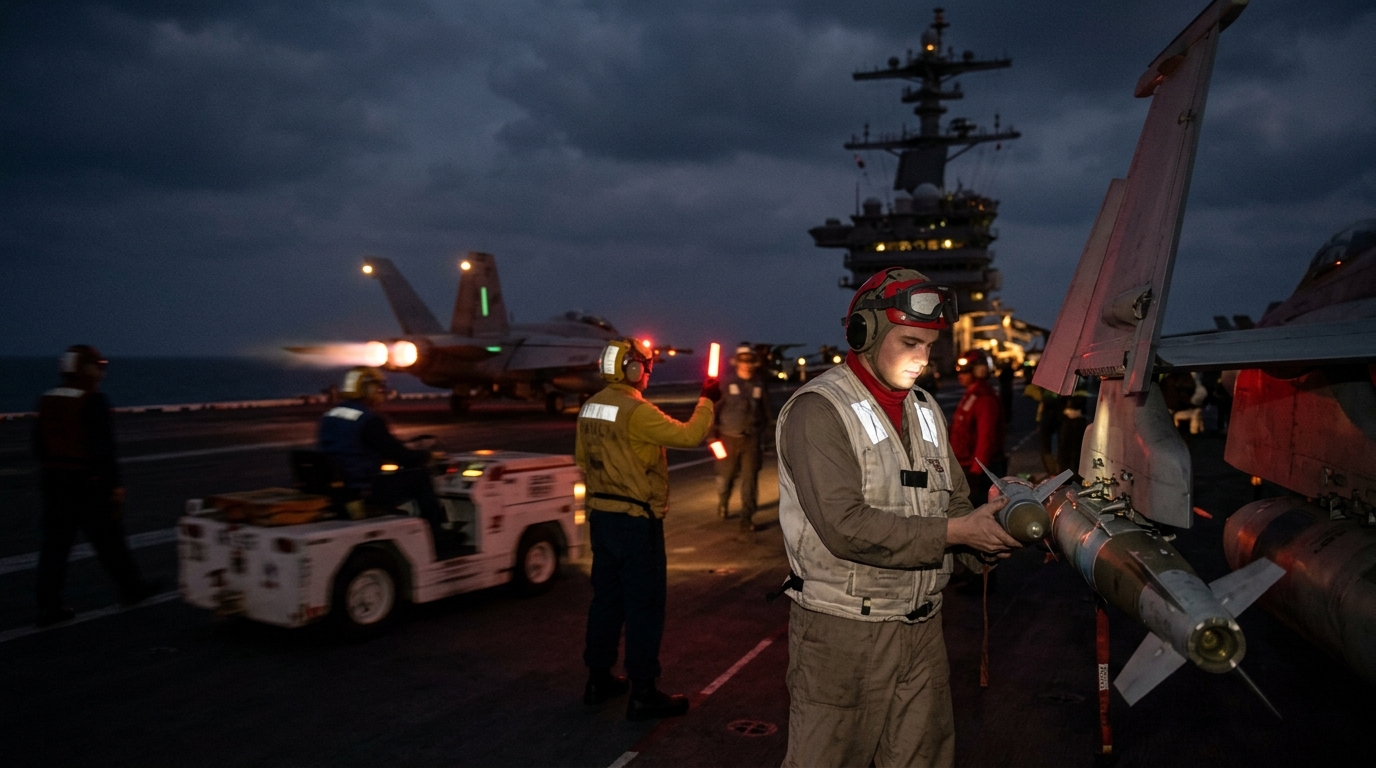
What began as a volatile standoff in the Persian Gulf has officially crossed into an extended, high-intensity military campaign. Overnight, U.S. Central Command (CENTCOM) confirmed the completion of its 13th consecutive night of military strikes against Iranian military infrastructure.
With American forces maintaining a heavy presence across the region, the conflict shows no signs of cooling. Instead, the theater of operations is widening across two of the world’s most crucial maritime chokepoints, pushing global energy markets into uncharted territory.

1. Night 13: What Was Targeted?
According to statements released by CENTCOM, the latest wave of airstrikes commenced at 6:45 p.m. ET on July 23 and concluded shortly after 9:00 p.m. ET. The focused campaign aimed to further dismantle the Islamic Revolutionary Guard Corps' (IRGC) ability to project power and threaten commercial maritime traffic.
Key strike targets included:
- Command & Control Infrastructure: Tactical command centers coordinating military and surveillance operations.
- Unmanned Assets: Drone storage facilities and assembly depots linked to regional strike networks.
- Communications & Surveillance: Coastal radar nodes and communication networks along the Persian Gulf coast.
- Maritime Launch Platforms: Tactical naval assets used to enforce local blockade actions.
Iranian state broadcaster (IRIB) reported strikes hitting targets across multiple provinces. Explosions were reported near coastal hubs like Bandar Abbas and Qeshm Island, as well as inland positions near Ahvaz, Shalamcheh, Omidiyeh, Firuzabad, and Khandab in Central Province.
2. The Chokepoint Crisis: Hormuz and the Naval Blockade
The air war remains tightly connected to the battle for global shipping routes.
As part of the active naval blockade reinstated by the U.S. military, CENTCOM reported that American forces have redirected 12 commercial vessels and disabled one that attempted to bypass maritime security protocols near Iranian ports.
Addressing the growing commercial fallout, President Donald Trump stated on Truth Social that any financial damages incurred by commercial ships or cargo during the conflict would be offset using seized Iranian assets held by the United States—a move he described as "fair and equitable".
The Regional Footprint: The U.S. Department of Defense confirmed that more than 50,000 American service members are currently deployed across the Middle East to support defensive posture, blockade enforcement, and strike operations.
3. The Red Sea Front: Houthi Attacks Trigger a "Double Whammy"
As night 13 unfolded in Iran, the crisis metastasized westward into the Red Sea. Yemen's Iran-backed Houthi movement launched anti-ship missiles targeting two Saudi oil tankers—the Encelia and the Layla—in the Bab el-Mandeb Strait, causing fires aboard both vessels.
The Houthi action marks a significant expansion of the maritime conflict. Maritime intelligence analysts at Lloyd's List described the simultaneous disruption in the Strait of Hormuz and the Bab el-Mandeb as a severe "double whammy" for international energy shipments.
In response, global oil benchmarks reacted immediately:
- Brent Crude: Surged past $100 per barrel for the first time in this latest cycle of fighting.
- Rerouted Cargoes: Saudi Arabia's attempt to bypass the Strait of Hormuz by piping crude overland to its West Coast port at Yanbu now faces direct threats from Houthi strikes in the Red Sea.
Washington responded with stern warnings, with President Trump promising "major military punishment" against both Iran and Houthi forces if attacks on commercial tankers continue.
4. Regional Counter-Strikes and the Path Ahead
The human and economic toll continues to mount across West Asia. Iranian health officials report dozens killed and hundreds injured since the renewed campaign began, while Iranian forces have countered with drone and missile salvos targeting forward U.S. bases and host country infrastructure in Kuwait, Bahrain, and Jordan.
While symbolic measures—such as a narrowly passed resolution in the U.S. House seeking to limit war powers—reflect political debate in Washington, the operational reality on the ground indicates further escalation. With diplomatic channels struggling to find traction and two major maritime corridors now under fire, the region remains locked in its most perilous security crisis in years.