Category: Global politics || Posted Jul 27, 2026
Nigeria and AfDB Mobilize Strategy for African Mineral Control and Value Addition
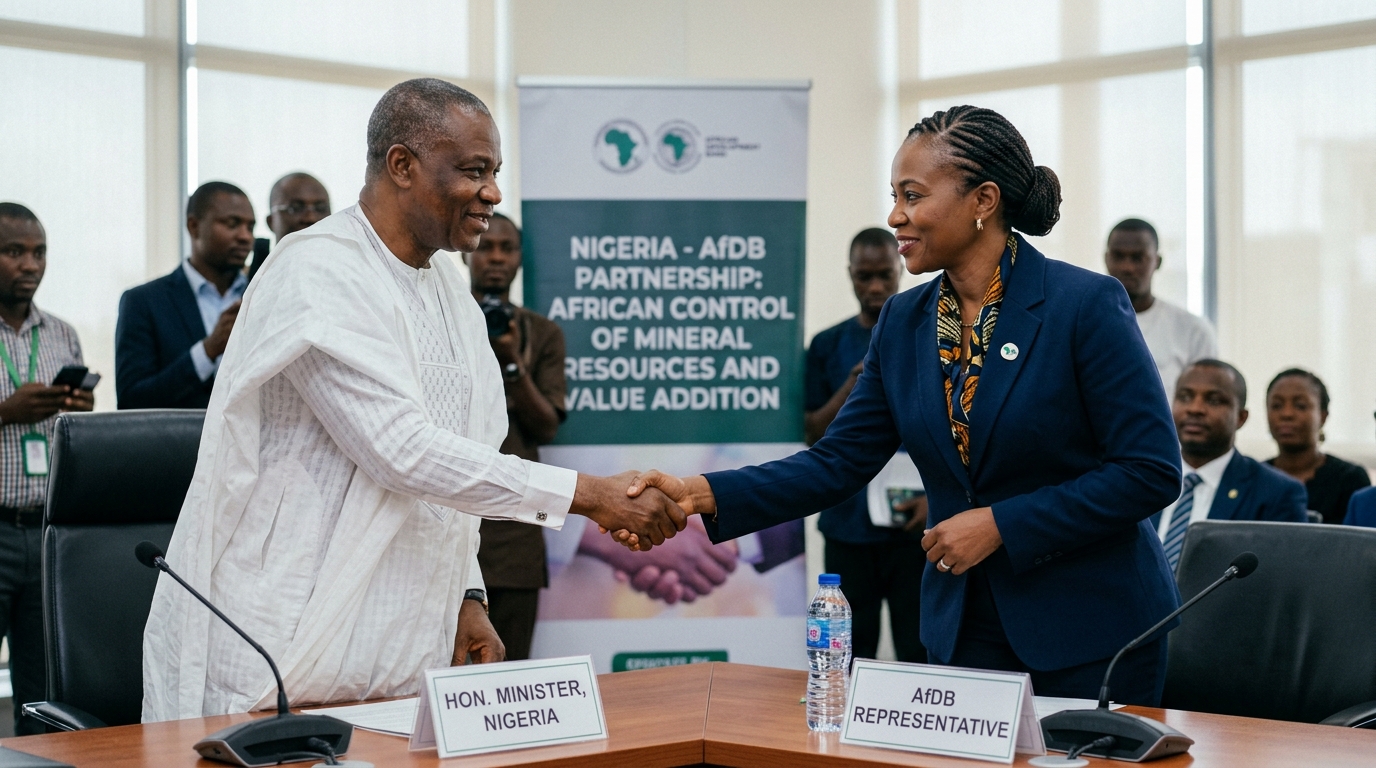
Nigeria and the African Development Bank (AfDB) have issued a joint call for African nations to take greater control over the continent’s mineral wealth through local processing, data sovereignty, regional collaboration, and targeted financing.
The declaration was delivered at the Ministerial Forum on Critical Minerals, Value Chain and Beneficiation: Pathways for African Transformation, hosted under the auspices of the AfDB in Abidjan, Côte d'Ivoire. Speaking at the gathering, Nigeria’s Minister of Solid Minerals Development and Chairman of the Africa Mineral Strategy Group (AMSG), Dr. Dele Alake, alongside AfDB President Dr. Sidi Ould Tah, underscored the urgency of transitioning from exporting raw, unprocessed minerals to building localized, high-value processing industries.
Core Pillars of the Regional Strategy
Deliberations at the forum focused on concrete policy mechanisms to ensure African nations retain higher economic returns from their critical mineral reserves. Key initiatives presented include:
- Local Beneficiation: Policies aimed at ending the export of unrefined ores by establishing local processing facilities to increase domestic retention of economic value.
- Data Sovereignty via PARC: A shift away from legacy overseas evaluation frameworks—specifically Australia’s Joint Ore Reserves Committee (JORC) standard—to the Pan African Resource Reporting Code (PARC). Developed by the Africa Minerals Development Centre (AMDC), PARC provides a standardized reporting system tailored to Africa's geological, environmental, and regulatory environments.
- West African Processing Corridor: A proposal to establish an integrated minerals processing hub spanning from Lagos to Dakar, patterned after the multi-country model of the Lobito Corridor. This shared infrastructure is intended to reduce capital costs, optimize supply chains, and distribute risk across participating countries.
- Shared Technical Infrastructure: Encouraging cross-border cooperation to avoid isolated national projects and instead build regional networks capable of handling complex mineral refining.
Financing Framework: The Abidjan Declaration
AfDB President Dr. Sidi Ould Tah noted that while Africa possesses significant critical mineral deposits required for global technological and green energy transitions, these reserves have historically failed to generate corresponding GDP growth due to financing constraints and low Foreign Direct Investment (FDI) in processing infrastructure.
To address these capital constraints, the forum concluded with the adoption of the Abidjan Declaration:
- AfDB Capital Mobilization: The AfDB pledged to deploy its financial mechanisms, technical expertise, and de-risking instruments to attract private and institutional capital into regional value addition projects.
- Infrastructure Investment: Focus will be directed toward funding shared infrastructure, bankable mineral processing projects, and human capital development to generate skilled local employment.
Multilateral Engagement
The forum brought together more than 20 African ministers responsible for mining, energy, industry, natural resources, and the green economy. Institutional participants included key financial bodies and international private sector representatives:
- African Development Bank (AfDB)
- African Export-Import Bank (Afreximbank)
- Export-Import Bank of the United States (US EXIM Bank)
- Mining entities and industrial groups from Germany, Canada, and the United States