Category: Global politics || Posted Jul 27, 2026
Diplomatic Pause in the Gulf: U.S. Halts Air Campaign as Oman Mediates Talks on the Strait of Hormuz
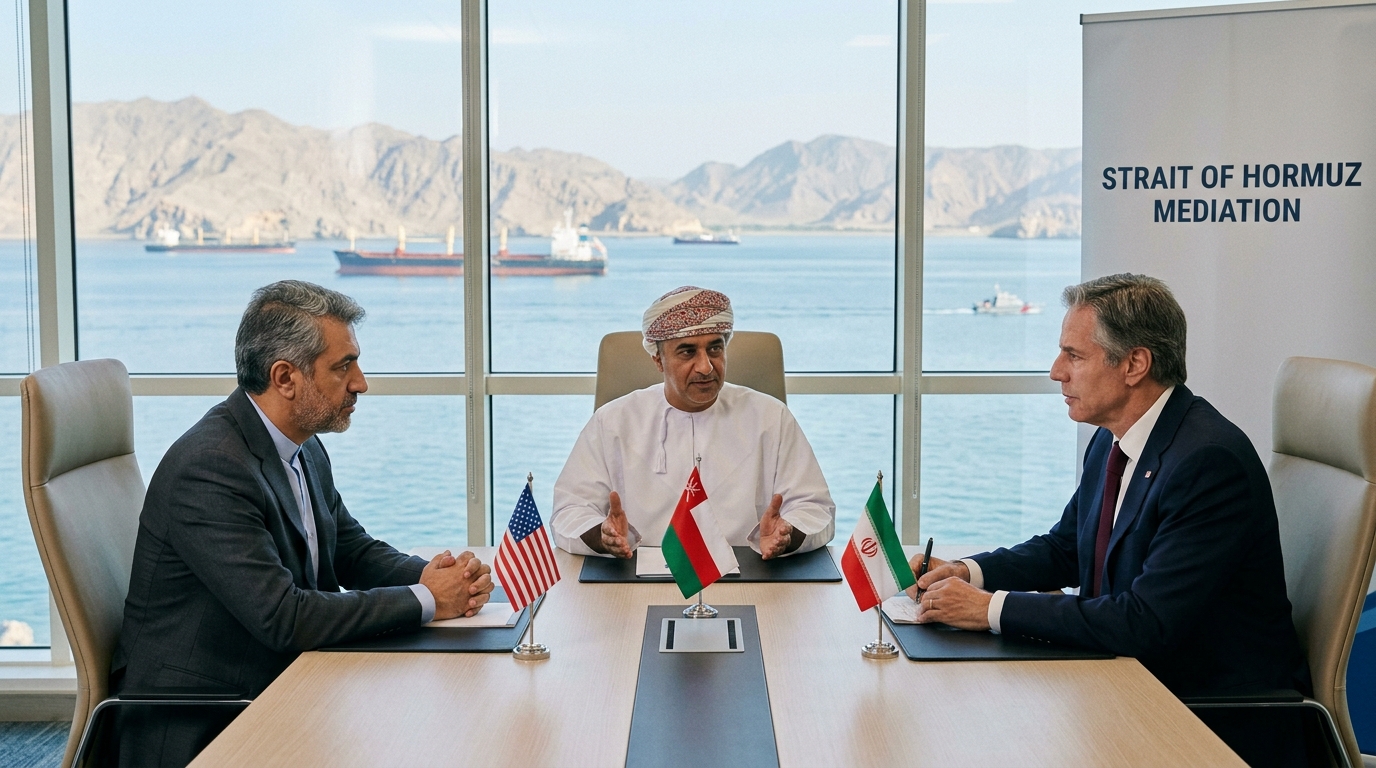
After 13 consecutive nights of heavy bombardment targeting Iranian military infrastructure, the skies over the Persian Gulf have briefly grown quiet. President Donald Trump ordered a temporary halt to U.S. airstrikes, opening a high-stakes diplomatic window as Omani envoys shuttle between regional capitals to negotiate a framework for restoring safe passage through the Strait of Hormuz.
While Washington maintains that its military assets remain fully deployed and "locked and loaded" across West Asia, the sudden lull in bombing offers the first real opportunity in weeks to avert an unrestricted regional war.
The Tactical Hold: Why Washington Paused
The decision to pause the bombing campaign came as U.S. military commanders prepared plans for a 14th consecutive night of precision strikes. According to intelligence and diplomatic reports, President Trump withheld authorization for further attacks after receiving briefings indicating that Omani-led backchannel discussions in Tehran were making meaningful headway.
The administration's dual-track approach seeks to balance intense pressure with diplomatic off-ramps:
- Leveraging the Bombardment: Two weeks of systematic strikes severely degraded coastal radar sites, missile launch positions, and drone assembly centers along Iran's southern coast.
- Testing Diplomacy: White House officials signaled that the pause is explicitly intended to give Omani mediators room to finalize maritime security protocols without the immediate disruption of active air raids.
- Conditional Readiness: Defense officials emphasize that U.S. Carrier Strike Groups and air wings remain on high alert, capable of resuming targeted offensive operations on short notice if talks collapse.
Inside the Muscat Backchannel
At the center of this diplomatic effort is the Sultanate of Oman, long recognized as a vital bridge between Western powers and Tehran. Omani officials traveled directly to Tehran over the weekend to present technical proposals aimed at de-escalating the naval standoff in the Gulf.
The talks center on several sensitive operational parameters:
- Restoring Transit Rights: Establishing verified, non-interference guarantees for commercial oil tankers transiting the narrow shipping lanes of the Strait of Hormuz.
- De-escalating the Blockade: Easing U.S. naval intercepts of commercial shipping while ensuring Iranian forces stand down from enforcement of unilateral toll systems or detainment of neutral vessels.
- Diplomatic Framing: In Tehran, Foreign Ministry spokesperson Esmaeil Baghaei noted that Iran is engaged with regional mediators like Oman on maritime stability, while remaining firm against direct coercion.
"Omani mediation has consistently provided a discreet, reliable conduit during periods of severe Gulf crisis," noted regional security analysts. "The challenge now is turning a fragile pause in strikes into a binding, enforceable maritime agreement."
Regional Volatility and Energy Market Uncertainty
Despite the pause in direct U.S.-Iran exchanges, the broader Middle Eastern theater remains highly volatile:
- Red Sea and Saudi Escalation: Yemen's Houthi movement claimed fresh missile and drone attacks targeting Saudi Aramco facilities near Yanbu and Jizan, demonstrating how easily the conflict can spill across regional energy networks.
- Oil Market Reaction: Benchmark crude prices experienced sharp intraday swings as global traders weighed the potential for a breakthrough in Hormuz against the ongoing threat of renewed military action.
- Allied Coordination: European and Gulf partners have welcomed the Omani mediation, urging both Washington and Tehran to extend the operational pause into a formal cease-fire framework.
With the pause currently entering its third day, diplomats in Muscat, Tehran, and Washington are working against the clock. Whether this diplomatic window leads to a durable maritime agreement or a return to nighttime strike sorties depends heavily on the outcomes of the Omani negotiations in the hours ahead.