Category: Global politics || Posted Aug 03, 2026
The Brink and the Bargain: Inside the Secret Diplomacy That Halted the U.S.-Iran Summer War
1. The Hook: High Stakes at the Edge of the Abyss
For months, the Middle East had been locked in a grinding, unpredictable cycle of kinetic violence. U.S. and Israeli airstrikes targeted Iranian energy grids and military infrastructure, while Tehran mobilized its proxies across the region, answering with ballistic missile salvos and a crippling chokehold on commercial shipping. By early August 2026, the specter of a full-scale, devastating regional war loomed closer than ever.
Then came a weekend that upended everything.
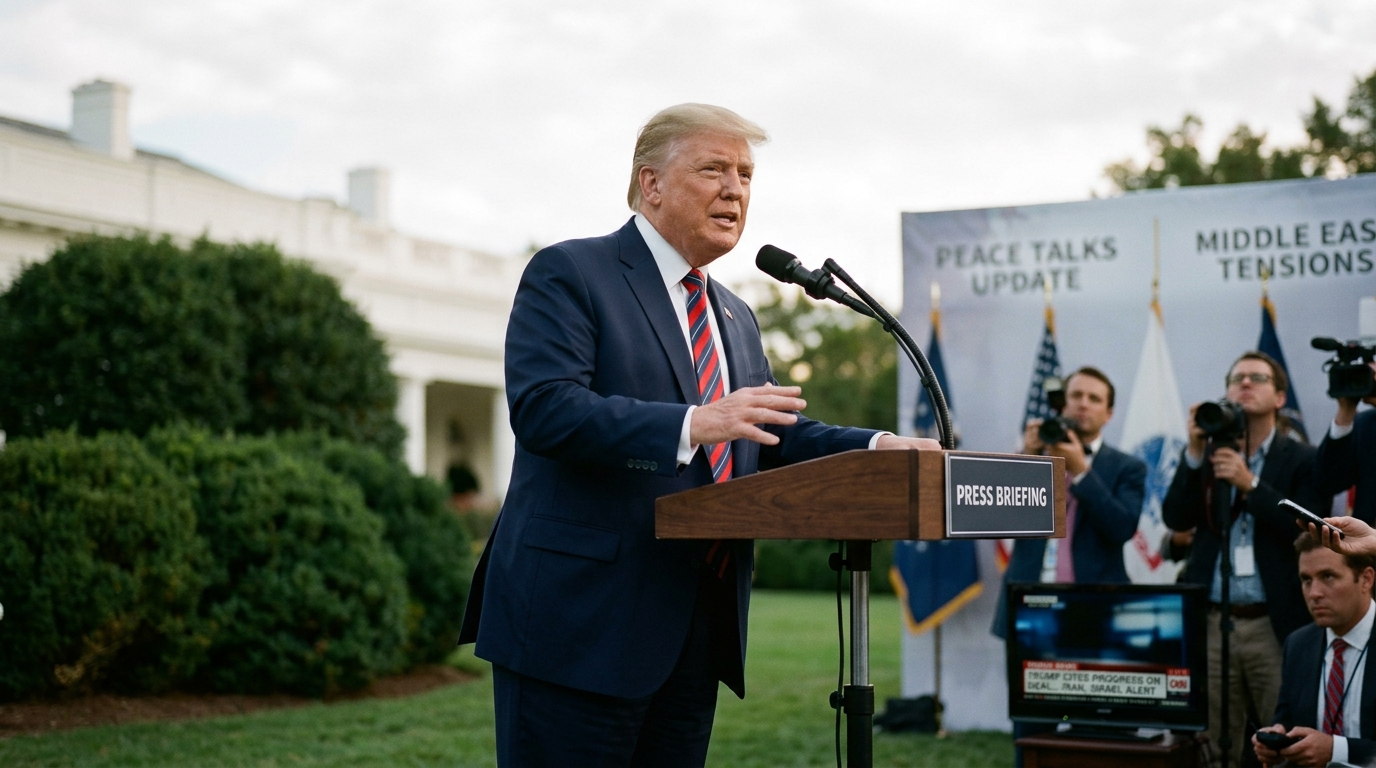
On Saturday evening, U.S. President Donald Trump took to social media to announce the sudden cancellation of a massive, imminent strike on Iran. The reason? A dramatic diplomatic breakthrough. Behind closed doors, regional mediators—chiefly from Pakistan and Oman—had reportedly hammered out the rough parameters of a sweeping peace framework. The promises were staggering: the immediate reopening of the Strait of Hormuz, the lifting of blockades, and a return to the negotiating table to finally address Iran’s nuclear program.
Yet, even as Trump declared progress, the reality on the ground remained razor-thin. Iran's acting defense minister dismissed the announcement as "psychological operations," insisting Tehran remained vigilant. Israel, heavily fortified and bracing for retaliation, stayed conspicuously silent while its military readied interceptor systems.
This is not the end of the conflict—it is the beginning of a high-wire diplomatic gamble. The question now gripping global markets and defense ministries is this: Is this the elusive framework for lasting peace, or just a tactical pause before an even deadlier escalation?
2. The Reality: The Anatomy of a Fragile Deal
To understand the sudden halt in hostilities, we must look at the intense backchannel negotiations that preceded it. The conflict, which erupted with ferocity earlier in the year, had already shattered a brief, Pakistan-brokered ceasefire in July. Since then, the violence had only intensified, with the U.S. imposing a naval blockade on Iranian ports and Iran redirecting or disabling commercial vessels in the vital Strait of Hormuz.
The Proposed Framework
According to regional officials and intercepted diplomatic communications, the newly proposed framework—which Trump cited as the reason for halting the strikes—is an ambitious, multi-phase attempt to de-escalate the entire region:
- The Strait of Hormuz: The cornerstone of the deal is Iran's commitment to the "immediate, complete, and total" reopening of the Strait of Hormuz, a critical artery for global oil supplies.
- Naval Blockade and Sanctions: In exchange, the U.S. would reportedly lift its naval blockade, allowing Tehran to resume vital oil exports, a lifeline for its heavily sanctioned economy.
- Return to Negotiations: The framework mandates a return to structured negotiations, moving beyond immediate ceasefires to address long-term issues, including Iran's nuclear program and the activities of its regional proxy militias.
The Positions on the Ground
While the framework exists on paper, the trust required to implement it is virtually nonexistent.
- The United States: President Trump framed the pause as a victory, claiming that Iran and regional allies essentially begged him to cancel the "locked and loaded" strike because a deal was imminent. However, U.S. forces remain heavily deployed, and the administration has shown a willingness to resume strikes if the terms are violated.
- Iran: Iranian officials have publicly downplayed the significance of Trump's announcement. The Defense Ministry stated it was "neither surprised nor passive," and Foreign Ministry officials emphasized that threats would not force a retreat from their "principled positions." However, diplomatic sources indicate that negotiations in Muscat regarding the Strait of Hormuz are indeed in their "final stages."
- Israel: Israel's silence is perhaps the most telling indicator of the deal's fragility. Having been prepared to launch coordinated strikes with the U.S. against Iranian energy infrastructure, Israel remains on high alert. Israeli officials have made it clear they are prepared to act independently if they perceive a direct threat, reflecting deep skepticism about any agreement that leaves Iran's nuclear capabilities intact.
3. The Horizon: Scenarios, Probabilities, and "What's Next?"
The sudden pause in military action has thrown global markets and defense planners into a state of intense speculation. Here is a breakdown of the three most likely scenarios for how this crisis unfolds over the coming weeks:
Scenario A: The Breakthrough (The "Muscat Miracle")
- The Mechanism: The backchannel negotiations succeed. Iran demonstrably ceases harassment of commercial shipping in the Strait of Hormuz, and the U.S. quietly lifts its blockade. Both sides enter formal, mediated talks in Islamabad or Muscat.
- Market Impact: Global crude prices, which have been heavily inflated by the war-risk premium, would see a sharp correction downward, likely stabilizing below $80 a barrel. Global logistics chains would breathe a sigh of relief.
- Probability: Moderate. The economic pressure on Iran is immense, providing a strong incentive to comply with the reopening of the strait. However, hardliners within the IRGC could sabotage the effort if they feel the concessions are too great.
Scenario B: The Tactical Pause (The "False Dawn")
- The Mechanism: The framework proves to be a mirage. Either Iran fails to fully reopen the strait, or a rogue proxy militia launches an attack on U.S. or Israeli assets, triggering an immediate and devastating military response.
- Market Impact: Oil prices would spike dramatically, potentially crossing the $100 per barrel threshold as traders price in the reality of a prolonged, unrestricted regional conflict.
- Probability: High. The history of this conflict is littered with broken ceasefires. The lack of trust between Washington, Tehran, and Jerusalem means that even a minor misunderstanding could ignite a massive escalation.
Scenario C: The "Neither War Nor Peace" Standoff (The "Friction Zone")
- The Mechanism: A messy middle ground emerges. The strait technically reopens, but transits are heavily monitored and occasionally delayed by Iranian naval forces. The U.S. maintains a robust military presence but avoids major strikes.
- Market Impact: Oil prices remain elevated and volatile. Shipping insurance premiums stay high, and the global economy continues to absorb the friction costs of a highly unstable Middle East.
- Probability: Very High. This scenario reflects the enduring reality of the region—a state of chronic tension where open war is avoided, but true peace remains impossible.
4. The Takeaway: The Variables That Matter
The dramatic weekend announcements have fundamentally altered the immediate trajectory of the conflict, but they have not resolved its underlying drivers.
Over the next 72 to 96 hours, analysts and policymakers will be watching three critical variables:
- Shipping Telemetry in the Strait of Hormuz: This is the most objective metric of success. If commercial tankers, particularly those carrying oil, resume normal, unharassed transit, the framework is holding.
- Israeli Military Posture: Israel's actions speak louder than its silence. Any redeployment of strike aircraft or adjustments to its air defense readiness will signal Jerusalem's true assessment of the Iranian threat.
- Proxy Restraint: The deal's viability depends not just on Tehran, but on its ability (or willingness) to restrain its network of militias across Iraq, Syria, and Lebanon. A single rogue attack could unravel the entire diplomatic effort.
The Middle East remains on a knife-edge. The weekend's diplomacy may have pulled the region back from the brink of all-out war, but the fundamental standoff over power, security, and nuclear ambition remains entirely unresolved.