Category: Tutorials & Guides || Posted Aug 07, 2026
How to Protect Your Digital Assets: A Beginner's Guide to Cold Wallet Security in 2026
Navigating the world of cryptocurrency can feel like walking a tightrope without a net. It is completely normal to feel intimidated by self-custody, especially when digital theft is evolving so rapidly. In fact, Chainalysis reported that personal wallet compromises accounted for approximately $713 million in stolen value in 2025 alone.
When you own cryptocurrency, you are your own bank—there is no customer service hotline to reverse a malicious transaction. The most definitive barrier against these escalating threats is a cold storage wallet.
Here is a straightforward, beginner-friendly guide to securing your digital assets in 2026 using cold storage.
What is a Cold Wallet?
To understand how to protect your assets, you first need to understand where they live. Crypto wallets generally fall into two categories:
- Hot Wallets: These are software wallets (like mobile apps, browser extensions, or desktop programs) that maintain a constant internet connection. While they are incredibly convenient for daily transactions and interacting with decentralized finance (DeFi), they leave your private keys exposed to remote hacking, phishing, and malware.
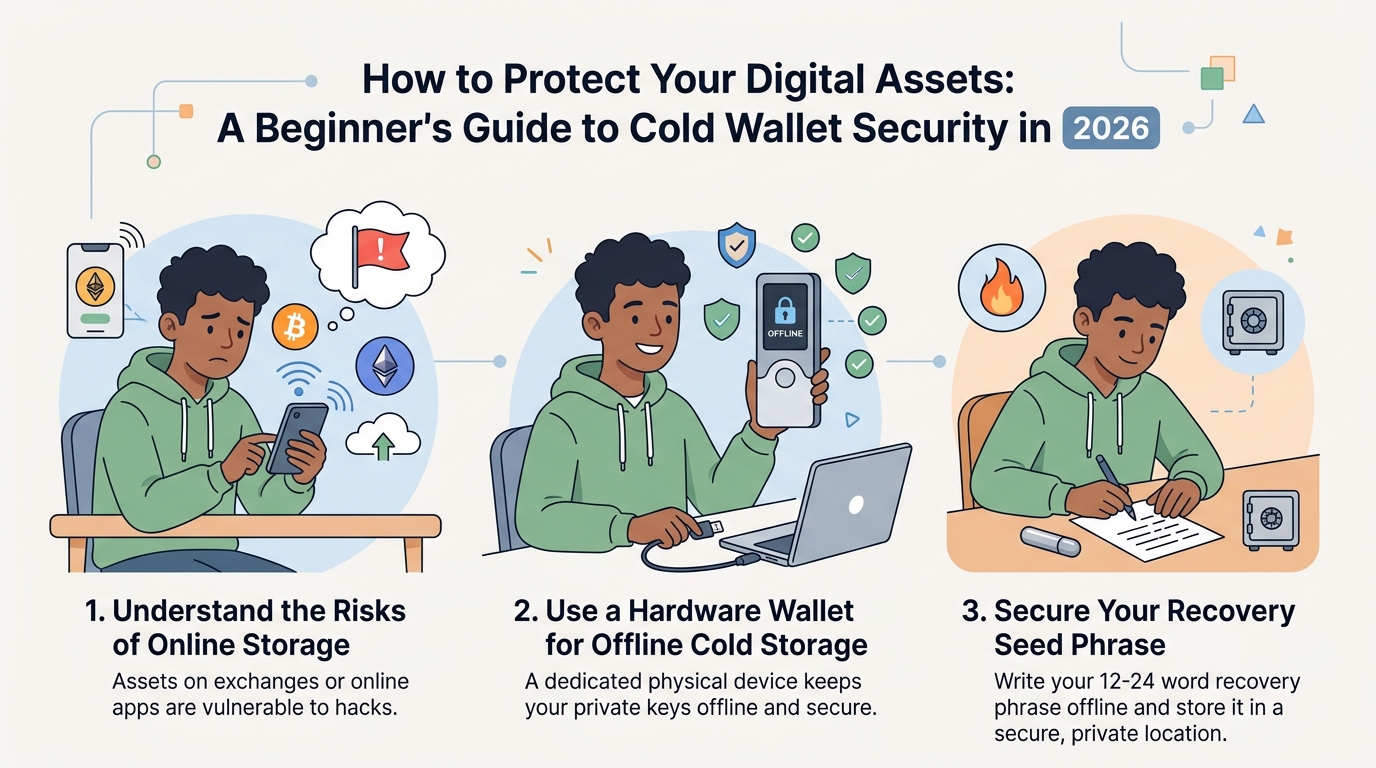
- Cold Wallets: These are physical hardware devices that store your private keys completely offline. By creating an "air gap" between your keys and the internet, cold wallets ensure that your most sensitive data is immune to remote digital attacks.
Top Hardware Wallet Options in 2026
If you are ready to take self-custody seriously, hardware wallets are widely considered the gold standard. Here are a few leading options currently dominating the market:
- Ledger Nano X: This remains a top choice, featuring a CC EAL5+ certified Secure Element chip and Bluetooth connectivity for mobile app use. It supports over 5,500 coins and tokens.
- Ledger Nano S Plus: For budget-conscious users, this device offers the same core Secure Element security as the Nano X but removes Bluetooth and limits internal storage space.
- ELLIPAL Titan 2.0: This device utilizes a 100% "air-gapped" model, meaning it completely lacks Bluetooth, WiFi, or USB connections. All transactions are signed via QR codes or microSD cards, completely preventing remote data exfiltration.
Ironclad Security Rules for Beginners
Buying a hardware wallet reduces the risk of key theft, but it cannot stop you from accidentally authorizing a bad transaction. To truly lock down your assets, you must follow strict security protocols.
1. Only Buy Direct
- Always purchase your hardware wallet directly from the official manufacturer's website or their authorized retailers.
- Never buy a used or pre-owned hardware wallet, as it may contain compromised firmware or pre-generated seed phrases designed to steal your funds.
2. Guard Your Seed Phrase with Your Life
- Your seed phrase (or recovery phrase) should never be stored digitally.
- Never type it into a computer, take a photograph of it, or store it in a password manager or cloud service.
- For ultimate durability against physical threats like fire or water damage, consider engraving your seed phrase onto metal backup plates.
- Keep your backup in a highly secure physical location, such as a fireproof home safe or a bank safety deposit box.
3. Practice WYSIWYS (What You See Is What You Sign)
- Malware on your computer can perform clipboard hijacking or address poisoning, changing the destination address on your computer screen without you noticing.
- Because malware cannot modify what is displayed on the hardware device itself, you must always verify the recipient address and transaction amount on your wallet's physical screen before hitting approve.
4. Segment Your Portfolio
- A widely recommended security best practice is to store 80% to 90% of your cryptocurrency holdings in cold storage for the long term.
- Only keep the small amounts you actively need for day-to-day trading or transactions in hot wallets.
- This compartmentalization minimizes your exposure in the event that your hot wallet is ever compromised.
Taking control of your digital wealth requires a shift in mindset, but by utilizing offline hardware and keeping your seed phrase strictly analog, you can participate in the crypto ecosystem with total peace of mind.