Category: Security & Regulation || Posted Aug 06, 2026
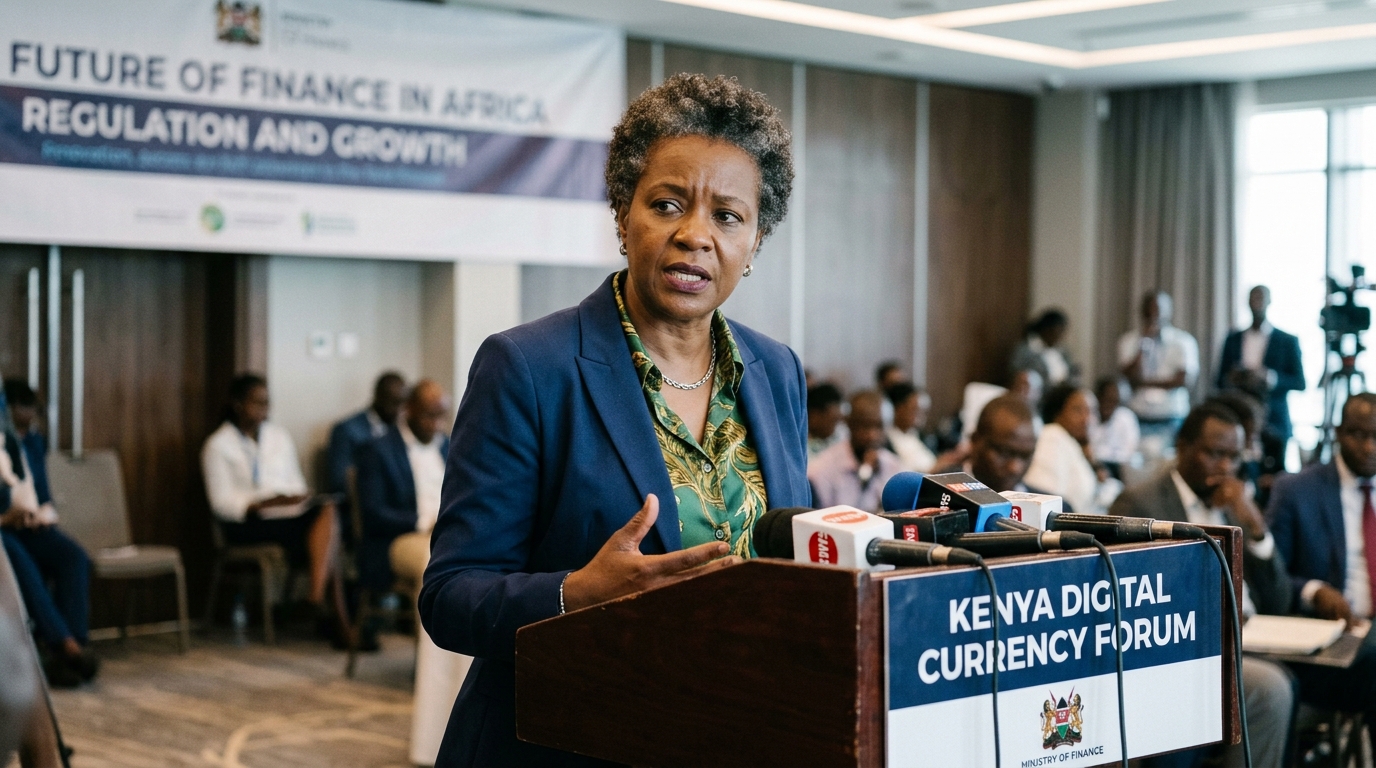
The Silicon Savannahs Wager How Kenya's Bold Crypto Law Could Become a Walled Garden
The clock is ticking on a high-stakes financial experiment in the heart of East Africa’s "Silicon Savannah."
For years, Kenya has been celebrated globally as a pioneer of digital finance, famously birthing the mobile money revolution with M-Pesa. Now, the nation is attempting to orchestrate an even more complex technological leap: integrating the wild, decentralized world of cryptocurrency into its formal banking sector. But as the ink dries on a sweeping new set of national regulations, a fierce debate is tearing through boardrooms in Nairobi and beyond. Are these new laws the foundation for Africa’s definitive digital asset hub, or are they inadvertently constructing a fortress that will starve the local market of global liquidity?
The tension reached a boiling point in early August 2026. Just days after the Kenyan government fully operationalized its landmark digital asset framework, leading financial experts sounded a blaring alarm. The warning is stark: in its aggressive attempt to control capital flight and protect its sovereign currency from "dollarization," Kenya may have overplayed its hand. By placing unprecedented restrictions on the lifeblood of the crypto economy—foreign stablecoins like USDT and USDC—regulators risk cutting off Kenyan innovators and traders from the very global markets they seek to dominate.
As the countdown to the final compliance deadline begins, the digital asset industry is watching Kenya closely. The outcome of this regulatory gamble will either cement the nation’s status as a forward-thinking titan of web3 or serve as a cautionary tale of how heavy-handed oversight can accidentally engineer market isolation.
To understand the magnitude of this legislative shockwave, we must bypass the market hysteria and examine the concrete, verified facts embedded within Kenya's newly minted legal framework. The current landscape is defined by a massive shift from a regulatory gray area to a highly formalized, heavily scrutinized financial perimeter.
The Legislative Timeline
The foundation for this era of oversight was laid on October 7, 2025, when the Kenyan Parliament officially passed the Virtual Asset Service Providers (VASP) Bill. For months, the industry awaited the specific rules of engagement. Those rules finally arrived on July 28, 2026, when the government gazetted the Virtual Asset Service Providers Regulations, 2026, effectively breathing life and teeth into the initial act.
This is not a set of gentle guidelines. The legislation mandates that any entity engaging in virtual asset operations—from providing digital wallets and exchange operations to tokenizing real-world assets and issuing stablecoins—must be heavily licensed. Existing operators have been placed on notice: they must assess their licensing obligations and prepare applications ahead of a strict transition deadline set for November 4, 2026.
The Capital Fortress
The technical and financial barriers to entry established by these regulations are immense. The rules impose tiered prudential requirements that demand serious institutional backing. The most striking of these is the capital requirement for stablecoin issuers, who are now legally obligated to maintain a paid-up capital of 300 million Kenya Shillings (approximately $2.3 million USD).
Furthermore, the regulations enforce rigorous consumer protection protocols. VASPs must implement advanced cybersecurity measures, maintain sufficient reserves, and physically segregate customer assets to ensure they are protected from creditor claims in the event of insolvency. Non-compliance is met with draconian penalties, including administrative fines of up to KES 5 million for companies, and potential criminal penalties reaching KES 8 million for entities or five years of imprisonment for individuals committing market conduct offenses.
The Stablecoin Chokehold and the Fear of Dollarization
The true flashpoint of the VASP framework, however, is its treatment of stablecoins. The Central Bank of Kenya (CBK) has been granted significant, sweeping autonomy over digital currency transactions. Under the new regime, stablecoins must be explicitly approved by the central bank and issued by a licensed stablecoin issuer before they can be listed on regulated local exchanges.
Crucially, the CBK holds the explicit authority to direct licensed intermediaries to restrict access to dominant foreign-issued stablecoins, such as Tether (USDT) and USD Coin (USDC).
This hardline stance on foreign stablecoins is not arbitrary; it is driven by a profound macroeconomic fear of "dollarization." As stablecoins become increasingly prevalent across the continent, African central banks are walking a tightrope. They face the genuine threat that unmitigated access to US dollar-pegged digital assets could undermine the demand for local fiat currencies, crippling a nation's monetary policy. This fear is grounded in regional precedent. An International Monetary Fund (IMF) report on neighboring Nigeria recently highlighted severe concerns over "capital flow management and financial stability" due to the surging popularity of US dollar-denominated stablecoins. Kenya is determined not to let its monetary sovereignty slip through the blockchain, and it has engineered its laws to keep the gates firmly locked.
With the factual groundwork laid, the focus shifts to the future. Market participants, institutional investors, and compliance experts are aggressively stress-testing potential outcomes. By imposing European-style MiCA requirements and stringent capital thresholds in an emerging market, Kenya has set the stage for three distinct, highly debated scenarios.
Scenario A: The Institutional Hub and the "RegTech" Boom (Best-Case Probability)
Industry analysts are watching to see if the rigorous nature of the VASP Regulations will successfully filter out bad actors and attract serious, institutional capital. By effectively clearing its Financial Action Task Force (FATF) AML/CFT gaps, Kenya could become the most trusted jurisdiction for digital finance in Africa.
One potential scenario is that this high-friction regulatory environment sparks a massive boom in Regulatory Technology (RegTech). Local startups that pivot to providing specialized compliance software, blockchain analytics, and automated reporting tools for licensed VASPs could see exponential growth. Market sentiment suggests that if traditional banks and telecommunications giants confidently enter the regulated crypto space, the influx of institutional liquidity will offset any short-term friction, cementing Kenya as the premier web3 destination on the continent.
Scenario B: The Isolation Warning and Liquidity Desert (Worst-Case Outlook)
On the opposite end of the spectrum is the dire warning recently issued by financial experts regarding market isolation. While unproven, many market observers speculate that the Central Bank of Kenya’s authority to restrict foreign stablecoins like USDT and USDC could be fatal to local exchange liquidity.
Stablecoins are the primary trading pairs and safe havens for crypto investors globally. Industry experts hypothesize that if Kenyan exchanges are forced to delist global stablecoins in favor of heavily monitored, locally issued alternatives, international traders will simply abandon the jurisdiction. Furthermore, the $2.3 million paid-up capital requirement for stablecoin issuance may be insurmountable for indigenous startups, effectively handing a monopoly to massive, legacy financial institutions. In this worst-case scenario, the local crypto market shrinks into a walled garden—safe, highly regulated, but entirely devoid of the capital volume and grassroots innovation that defined its early years.
Scenario C: The Rise of the Two-Tier System (Trend-Driven Probability)
A highly probable outcome based on current regulatory trends is the fracturing of the Kenyan digital asset market into a two-tier ecosystem.
Strategists theorize that major global players—well-capitalized international exchanges and deep-pocketed fintechs—will absorb the licensing costs and conform to the CBK's strict mandates, capturing the institutional and high-net-worth retail markets. Meanwhile, the smaller, agile developers who cannot afford the compliance overhead may resort to regulatory arbitrage. Some analysts foresee a scenario where these grassroots innovators migrate their operations to more permissive jurisdictions or double down on fully decentralized, peer-to-peer (P2P) trading networks that exist outside the purview of the formal VASP framework, forcing regulators into a perpetual game of digital whack-a-mole.
Kenya's Virtual Asset Service Providers Regulations of 2026 represent a watershed moment not just for East Africa, but for the global digital economy. The era of permissionless, unchecked crypto trading in the nation is officially dead. In its place, a highly fortified, institutionally demanding infrastructure is being erected—one designed to protect consumers and preserve the sovereignty of the Kenyan Shilling against the creeping tide of digital dollarization.
For market participants navigating this pivotal transition, the next few months are critical. The transition deadline of November 4, 2026, serves as the ultimate ticking clock for businesses operating within Kenyan borders.
Readers, investors, and technologists should closely monitor three key variables. First, watch how the Central Bank of Kenya exercises its autonomy over foreign stablecoins—any official restriction on USDT or USDC will be the first domino to fall in the "market isolation" theory. Second, observe the speed at which existing operators secure their licenses, as this will indicate whether the regulatory burden is realistic or suffocating. Finally, track the response of traditional legacy banks; if they aggressively launch digital asset products under this new framework, the balance of power in Africa's financial sector will permanently shift.
Kenya has rolled the dice. It is betting that true innovation requires a strong cage, but it must now prove that the cage won't inadvertently starve the golden goose.
Editorial Disclaimer: This article is strictly for informational, educational, and analytical purposes. It does not constitute financial, legal, tax, or investment advice. Market predictions, geopolitical scenarios, and hypothetical outcomes represent qualitative policy analysis, not guaranteed future results. Readers should conduct independent research and consult qualified legal and technical professionals before making operational decisions regarding cryptocurrency or digital assets.