Category: Global politics || Posted Aug 22, 2026
Strait of Hormuz Conflict Escalates Demand for Renminbi Oil Settlement Assets Across Middle East
The Petroyuan Pivot: How the Strait of Hormuz Standoff Is Rewriting Middle East Energy Finance
For over half a century, the unwritten law of global energy rested on a single financial pillar: oil is priced, bought, and settled in United States dollars. The "Petrodollar" was not merely a convenience; it was the structural glue of American financial hegemony, ensuring that every industrial economy on Earth maintained vast dollar reserves simply to keep its power grids running.
That fifty-year monopoly is facing its most severe structural stress test in modern history.
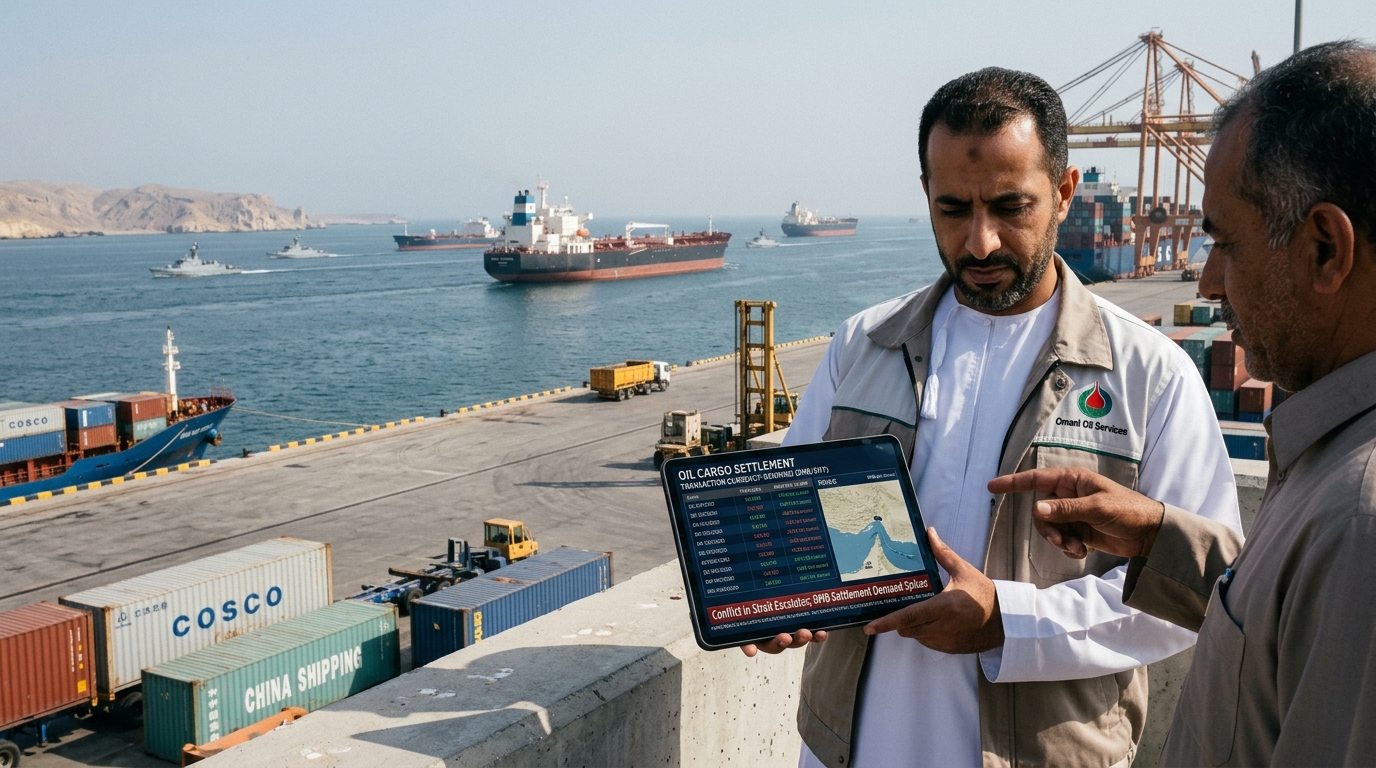
As military standoffs, boarding actions, and missile threats disrupt commercial traffic through the Strait of Hormuz, a quieter, potentially more radical shift is accelerating beneath the surface of physical trade. Facing severe maritime friction and soaring war-risk insurance premiums, energy exporters across the Middle East are quietly diversifying their financial architecture. Demands for Renminbi (RMB) settlement assets—the long-discussed "Petroyuan"—have surged across Gulf trading desks. Wikipedia+ 1
Driven by Tehran's conditional transit proposals, Beijing's expanding CIPS network, and rising appetite among major energy consumers seeking to de-risk from dollar-centric clearing clearinghouses, the Persian Gulf has transformed into an active arena for global currency competition. Is this the beginning of a truly multi-currency global energy order, or a temporary workaround born of regional crisis?
To separate geopolitical hype from structural reality, we must look at verified transactional data, shipping volumes, and official banking metrics recorded across the Persian Gulf energy corridor.
The Geography of Disruption
The Strait of Hormuz—a narrow, 21-mile-wide maritime corridor connecting the Persian Gulf to the Gulf of Oman—normally handles approximately 20 million barrels of crude and condensate per day, alongside roughly 20% of global liquefied natural gas (LNG).
Since early 2026, security threats, mine scares, and interdictions have repeatedly choked transit throughput. At peak disruption points earlier this year, daily transit volumes dropped by over 80% before stabilizing into an unpredictable trickle of specialized, heavily insured, or sovereign-escorted vessels.
The Renminbi Settlement Spike
The financial mechanics shifted when Iranian authorities signaled that tankers willing to settle transactions in Chinese Renminbi (RMB) using China's Cross-Border Interbank Payment System (CIPS) would receive priority clearance and localized security assurances.
- CIPS Transaction Record: According to Chinese financial disclosures, CIPS processed a single-day record of 1.22 trillion yuan ($179 billion) in cross-border settlements, driven significantly by commodity trades in Asia and the Middle East.
- Independent Desk Volume: Independent energy trading firms in Dubai, Singapore, and Shanghai report a measurable uptick in bilateral yuan-denominated crude contracts, particularly for non-bound cargoes bound for Asian refiners.
- Benchmark Pricing Limitations: While physical settlement in RMB has expanded rapidly, global oil pricing benchmarks (such as ICE Brent and NYMEX WTI) remain overwhelmingly denominated in U.S. dollars. Most "Petroyuan" trades are currently executed by pricing crude in dollars first and converting to RMB at the time of invoice settlement.
The Petrodollar vs. Petroyuan Landscape
| Metric / Dimension | Traditional Petrodollar System | Emerging Petroyuan Framework |
| Primary Clearing Mechanism | SWIFT & Federal Reserve Fedwire | CIPS (Cross-Border Interbank Payment System) |
| Primary Liquidity Hubs | New York, London | Shanghai, Hong Kong, Dubai |
| Pricing Benchmark | ICE Brent, NYMEX WTI (USD) | INE Shanghai Crude Futures (RMB) |
| Reserve Asset Destination | U.S. Treasuries, Western Equities | Sovereign Debt, Local Infrastructure, Gold |
| Adoption Drivers | Global standard, high liquidity, deep capital markets | Sanctions insulation, direct Asian demand, chokepoint bypass |
As the physical crisis in the Strait of Hormuz lingers, financial strategists, energy economists, and central bankers are analyzing how a prolonged settlement shift could alter the global monetary landscape.
Note: The following scenarios represent market sentiment, structural modeling, and speculative industry projections rather than guaranteed outcomes.
Scenario A: The Multi-Currency Friction Model (Estimated Probability: ~50%)
- The Hypothesis: The petrodollar loses its absolute monopoly, giving way to a fragmented, multi-currency settlement ecosystem. Middle Eastern producers continue settling direct Asian sales in Renminbi and UAE Dirhams while retaining U.S. dollars for Western trade and long-term sovereign reserve accumulation.
- Market Sentiment Impact: Commodity traders face higher hedging and currency-conversion costs. However, global supply chains become more resilient against single-currency sanction chokepoints.
Scenario B: The Pragmatic Bipolar Split (Estimated Probability: ~35%)
- The Hypothesis: Global oil markets divide into two distinct operational blocks: a Western-aligned dollar clearing zone and an Eastern CIPS-aligned clearing zone led by Beijing, Tehran, and participating Gulf exporters. The INE Shanghai futures contract gains significant market share, establishing independent RMB crude benchmarks. Foreign Affairs Forum+ 1
- Market Sentiment Impact: A permanent "reputational and compliance premium" is applied to dollar-cleared barrels versus RMB-cleared barrels, creating structural arbitrage opportunities for independent trading houses.
Scenario C: The Sovereign Retrenchment (Estimated Probability: ~15%)
- The Hypothesis: As maritime security stabilizes in the Strait of Hormuz and diplomatic accords ease regional tensions, the capital efficiency and unmatched liquidity of the U.S. dollar reassert dominance. Renminbi oil settlements contract back to niche, bilateral trade agreements.
- Market Sentiment Impact: Capital flows quickly re-center on Western Treasury markets, demonstrating that operational conveniences during security crises do not easily overturn decades of deep monetary network effects. The Japan Times
The conflict surrounding the Strait of Hormuz has proven that chokepoints in physical geography can rapidly trigger shifts in financial architecture. While the U.S. dollar remains the dominant global reserve currency, the rapid rise in Renminbi oil settlement requests signals a permanent desire among Middle Eastern producers and Asian importers to hedge their financial exposure.
For energy analysts, institutional investors, and global macro strategists, three critical variables will signal what happens next:
- CIPS Expansion and Offshore RMB Liquidity: Track whether Chinese state banks increase the availability of offshore yuan liquidity (CNH) in Gulf financial centers like Dubai and Abu Dhabi.
- INE Shanghai Futures Trading Volume: Monitor open interest in China's RMB-denominated oil futures to see if actual pricing benchmark power shifts away from Western exchanges.
- Gulf Sovereign Wealth Allocation: Observe whether major Gulf sovereign funds shift a larger percentage of their capital allocation out of dollar assets and into yuan-denominated debt and infrastructure holdings.
The physical transit of oil through narrow straits will always command headlines, but the real battle for the future of the global economy is taking place on digital ledger networks and cross-border bank settlement rails.