Why the Global Economy Continues Defying Energy Shocks, High Tariffs, and Persistent Inflation Pressures
The consensus playbook for global macroeconomics has officially broken down. For decades, the financial world operated on a set of ironclad mathematical assumptions: stack a multi-year global pandemic on top of the largest European land war in eighty years, unleash a series of severe energy price shocks, spike baseline interest rates to multi-decade highs, and layer on an aggressive resurgence of international trade tariffs—and the inevitable result would be a devastating, synchronized global economic recession.
Yet, as the global economy navigates the mid-2020s, the economic apocalypse that was widely heralded by risk models and Wall Street forecasters has simply failed to materialize.
Instead, the global economic engine continues to sputter forward, displaying a stubborn, perplexing resilience that confounds conventional economic theory. Growth metrics in major developed markets have repeatedly outperformed baseline expectations, unemployment numbers across key industrial nations remain near historical lows, and corporate earnings have managed to adapt to unprecedented input costs.
How is the modern global economic apparatus defying the combined gravity of energy volatility, trade protectionism, and persistent inflation? The answer lies in a fundamental structural evolution of how money, labor, energy, and corporate supply chains operate in an increasingly fragmented world.
To understand why the global economy has refused to buckle under pressures that historically triggered deep downturns, one must examine the verified structural shifts that separate today’s macroeconomic landscape from that of the 1970s or late 2000s.
The Fiscal Cushion and Post-Pandemic Savings Buffers
The primary shock absorber shielding the global economy has been the scale of fiscal intervention deployed by major developed nations. The fiscal responses to global disruptions provided an unprecedented injection of direct liquidity into corporate and household balance sheets. While these measures contributed significantly to subsequent inflationary pressures, they also created a massive financial cushion.
Corporations used the prolonged period of near-zero interest rates preceding recent rate-hiking cycles to lock in long-term debt at historically low fixed rates. Consequently, when central banks aggressively raised benchmark interest rates to combat inflation, corporate interest expenses did not immediately surge in tandem. Many large-scale enterprises found themselves insulated from high interest rates, effectively delaying the traditional monetary policy transmission mechanism.
The Structural Transformation of Energy Markets
Energy shocks historically acted as immediate, unmitigated taxes on global growth. The disruption of Eurasian pipeline networks and Middle Eastern shipping routes undeniably drove natural gas and crude oil prices to volatile peaks, but the global energy architecture proved far more flexible than in previous eras.
Liquefied Natural Gas (LNG) infrastructure expanded at a rapid pace, enabling Western Europe and Asian importers to swap rigid pipeline dependencies for sea-borne spot markets. Furthermore, the rapid scaling of renewable energy installations, utility-scale battery storage, and nuclear life-extensions created a higher baseline of domestic energy generation. While energy costs remain structurally elevated compared to pre-2020 baselines, the energy intensity required to produce a unit of real GDP in developed economies has fallen drastically over the past two decades. Simply put, modern economies require less oil and gas per dollar of output than they did during historical energy crises.
Supply Chain Adaptation and Tariff Absorption
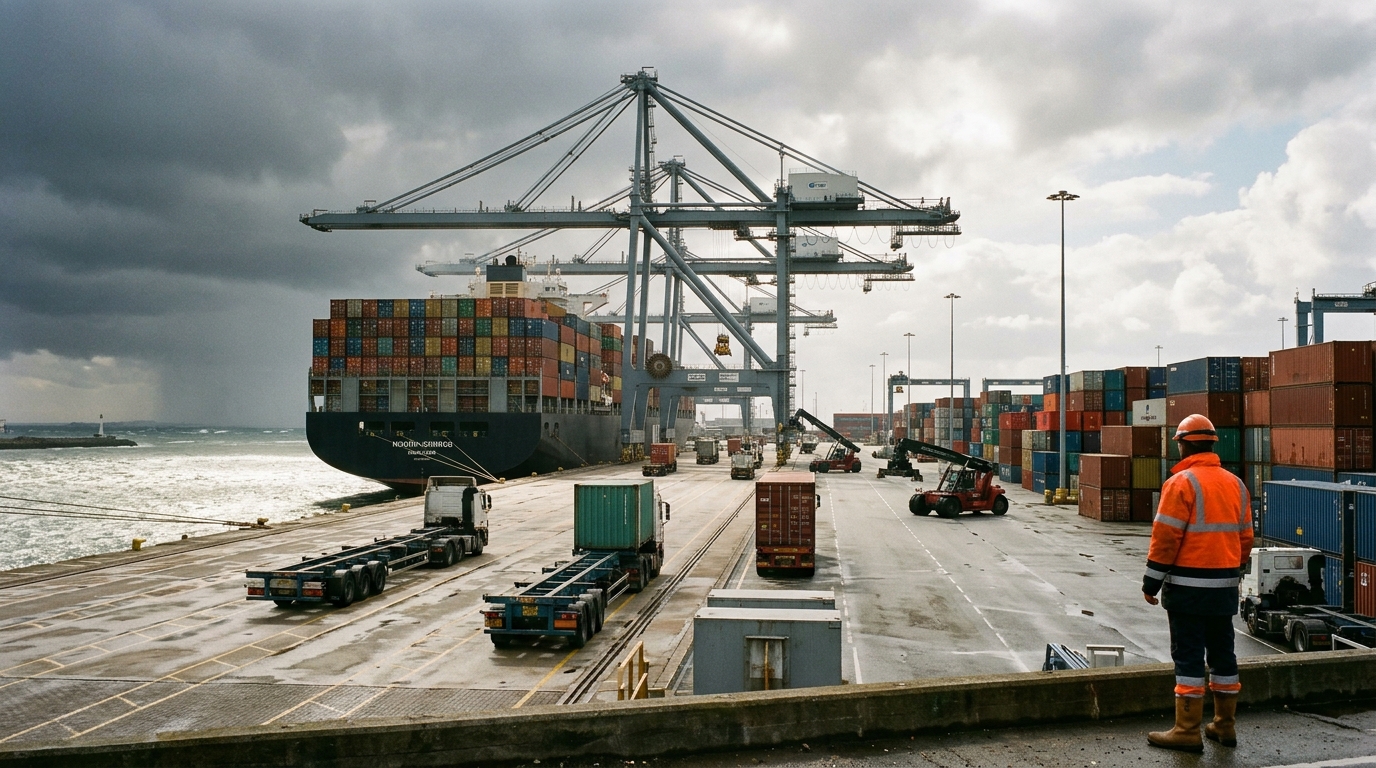
The global trade landscape has been subjected to a barrage of tariff increases, export controls, and protectionist industrial policies—ranging from the expanding trade friction between the United States and China to European carbon border adjustments. Historically, sharp tariff increases acted as a direct drag on global trade volume.
However, rather than shrinking, global trade flows have reorganized through complex intermediary networks. Multinationals have increasingly adopted a "Nearshoring" or "Friendshoring" operational structure. Countries like Mexico, Vietnam, Poland, and India have seen massive inflows of foreign direct investment as manufacturing hubs, acting as strategic bridges in global commerce. While this structural rerouting increases baseline logistics costs and contributes to sticky inflation, it prevents the complete freezing of global trade networks, allowing goods to flow despite regulatory and political barriers.
Labor Market Dynamics and Corporate Pricing Power
Despite aggressive central bank tightening cycles designed to cool overheating economies, labor markets across the United States, Europe, and parts of Asia have remained remarkably tight. Demographic shifts, including the retirement of large demographic cohorts and post-pandemic labor force re-allocations, created structural labor shortages in key sectors such as healthcare, logistics, engineering, and service industries.
This persistent labor shortage supported wage growth, which helped consumers absorb higher prices for essential goods. Simultaneously, large corporations demonstrated unprecedented "pricing power"—the ability to pass increased input, transport, and tariff costs directly down to end consumers without experiencing an immediate drop in sales volume. This corporate margin resilience prevented widespread layoffs, keeping unemployment low and consumer spending operational.
While the global economy has demonstrated remarkable durability thus far, the critical question facing policymakers, institutional allocators, and industry leaders is whether this resilience represents a permanent structural evolution or merely a delayed reaction to mounting systemic pressures. Looking ahead, market analysts and macroeconomists are evaluating several distinct scenarios for how this economic balancing act could unfold.
Scenario A: The Productivity Soft Landing (The Optimistic Trend)
In this high-growth potential scenario, the massive ongoing capital investments into artificial intelligence, industrial automation, and green energy infrastructure begin to yield tangible total-factor productivity gains across developed and developing economies alike.
Industry analysts are watching to see if digital transformation can offset the structural headwinds of high borrowing costs and aging demographics. If automated logistics, AI-driven operational efficiencies, and localized renewable energy generation lower unit production costs fast enough, corporate profit margins could remain healthy even as wage growth normalizes. In this scenario, persistent inflation gradually cools toward central bank targets without requiring a sharp rise in unemployment, allowing central banks to carefully normalize policy rates and securing a sustainable, multi-year economic expansion.
Scenario B: The Permanent "Higher-for-Longer" Grind (The Base-Case Outlook)
A widely discussed trajectory among market strategists envisions a world where economic growth remains positive but modest, accompanied by permanent, structural inflationary pressures.
In this scenario, deglobalization, the ongoing cost of duplicating supply chains, and the massive capital requirements of the global energy transition create a persistent inflationary floor of 3% to 4%. Central banks are forced to maintain benchmark interest rates well above their pre-2020 averages to prevent inflation from spiraling higher. Under this "higher-for-longer" baseline, economic growth becomes highly uneven. Well-capitalized mega-cap corporations with strong balance sheets continue to thrive, while small-to-mid-sized enterprises, heavily indebted real estate sectors, and lower-income consumers face continuous financial squeeze. The economy avoids a deep crash, but trades within a constrained, volatile range.
Scenario C: The Cumulative Friction Break (The Downside Risk Scenario)
While unproven, some risk managers speculate that the global economy's apparent immunity to shocks is an illusion created by lagging indicators and lingering post-pandemic liquidity buffers that are now running dry.
In this downside scenario, the cumulative weight of high interest rates, elevated corporate debt refinancing walls, sustained energy volatility, and escalating trade wars finally reaches a tipping point. As legacy low-rate corporate debt matures, refinancing at significantly higher rates forces businesses to shift from absorbing costs to aggressive cost-cutting and widespread workforce reductions. A sharp uptick in unemployment rapidly erodes consumer spending, triggering a delayed, synchronized global downturn that exposes vulnerabilities in non-bank financial institutions and highly leveraged sovereign debt markets.
The resilience of the global economy in the face of energy shocks, tariff escalation, and sticky inflation is a testament to the flexibility of modern supply chains, corporate balance sheet management, and structural labor dynamics. The historical playbook that dictated an immediate crash in response to these macro pressures has proven insufficient to explain the current economic reality.
However, resilience is not invulnerability. The buffers that protected the global system—post-pandemic cash reserves, low fixed-rate legacy debt, and strong consumer demand—are dynamic variables that shift over time.
As decision-makers navigate this unprecedented economic environment, the key variables to watch include:
- The Corporate Refinancing Wall: Tracking how medium and large-scale enterprises handle upcoming debt maturities as low fixed-rate bonds mature into higher-rate environments.
- Labor Force Participation and Unit Labor Costs: Monitoring whether wage growth continues to support consumer demand without reigniting secondary inflationary spirals.
- The Real Friction Costs of Supply Chain Rerouting: Observing whether "friendshoring" can maintain supply chain reliability without driving input prices past consumer absorption thresholds.
- Energy Transition Capital Flows: Assessing whether investments in localized, renewable, and nuclear energy infrastructure can lower long-term baseline energy volatility.
The modern global economy has proven far tougher than traditional models predicted. Navigating what comes next requires abandoning outdated assumptions and closely monitoring the structural realities rewriting the rules of global finance.