Why Multi-Trillion AI Infrastructure Capital Expenditure Is Driving Global Market Resilience and Sovereign Debt Demand
The modern global economy is currently witnessing the most capital-intensive technological deployment in human history. We have entered the era of the multi-trillion-dollar Artificial Intelligence supercycle—a relentless, industrial-scale infrastructure buildout that makes the nineteenth-century railway boom look like a minor capital investment.
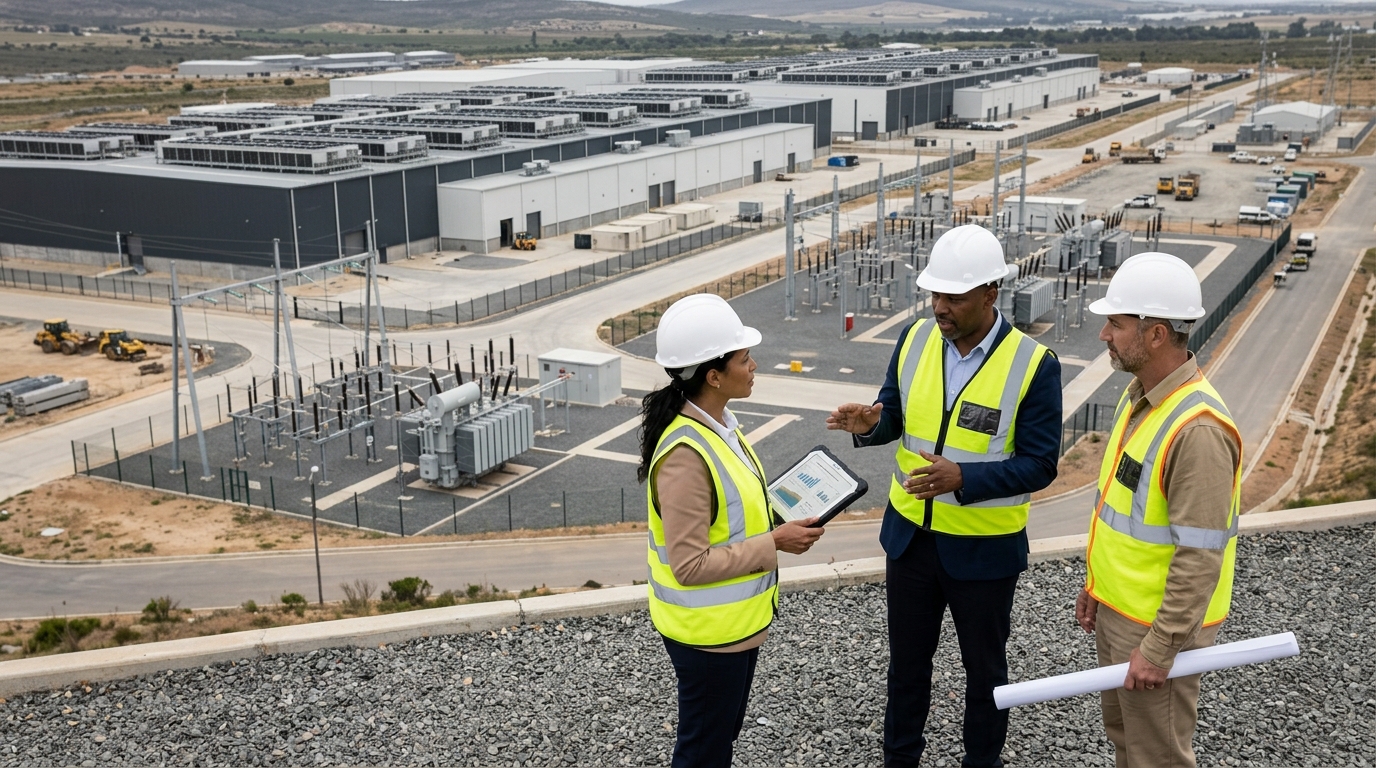
Across northern Virginia, Scandinavian fjord valleys, West Asian desert corridors, and Southeast Asian tech hubs, mega-corporations and sovereign entities are deploying capital at a staggering pace. They are digging massive foundations, securing nuclear power off-take contracts, acquiring vast networks of advanced high-bandwidth memory chips, and laying high-voltage energy grids capable of powering entire cities.
This isn't merely a software boom or a venture-backed app cycle. It is a fundamental, physical transformation of global capital allocation.
What has shocked Wall Street strategists and central bank policy teams alike is the extraordinary secondary effect of this massive spending: the multi-trillion-dollar corporate AI capital expenditure wave is acting as a massive structural stabilizer for the entire global macroeconomy. By generating an endless demand for corporate debt, long-duration sovereign financing, advanced industrial equipment, and domestic energy generation, the AI infrastructure buildout has effectively built a high-grade floor beneath global market resilience.
Even as borrowing costs hover near multi-year highs and geopolitical tensions fragment traditional trade routes, the global economy continues to expand. The underlying reason is clear: the physical construction of artificial intelligence has become too large to fail, creating an unprecedented intersection between tech hyperscalers, sovereign balance sheets, and global debt markets.
To comprehend the sheer magnitude of this structural shift, one must examine the verified numbers, balance sheet mechanics, and corporate debt deployments powering the current AI infrastructure pipeline.
The Hyperscaler Balance Sheet Reality
The corporate engines driving this expansion—primarily the major cloud hyperscalers including Alphabet, Amazon, Meta, and Microsoft—have elevated their capital expenditures to historically unprecedented levels. In aggregate, annual capital expenditure guidance across the top technology firms has crossed hundreds of billions of dollars annually, with industry projections indicating multi-trillion-dollar cumulative commitments over the remainder of the decade.
Unlike the dot-com bubble of the late 1990s, which was heavily financed by speculative, uncollateralized equity and high-yield junk debt, today’s infrastructure spending is anchored by some of the most liquid balance sheets in corporate history. The major hyperscalers generate hundreds of billions in annual cash flow from operations, providing an immediate internal capital cushion to fund mega-scale data center construction, custom silicon development, and optical networking upgrades.
The Sovereign Debt and Corporate Bond Transmission Mechanism
However, even mega-cap cash flows are insufficient to fund the full scope of the planned infrastructure footprint. This capital deficit has sparked a historic wave of corporate bond issuances and creative sovereign-backed financing arrangements.
Tech giants and specialized infrastructure developers are increasingly tapping the investment-grade debt markets, issuing high-grade long-duration corporate bonds to fund data center campuses and long-term energy procurement contracts. Simultaneously, sovereign wealth funds in regions like the Middle East and East Asia are entering direct co-investment partnerships. By extending sovereign guarantees, tax incentives, and direct equity injections into localized AI infrastructure hubs, governments are using AI buildouts as a strategic mechanism to absorb and recycle national debt reserves.
This massive issuance of corporate and sovereign-aligned debt has created a unique dynamic in fixed-income markets. Yields on high-grade corporate paper remain structurally attractive to institutional investors, pension funds, and insurance firms, absorbing vast pools of global savings and providing stable returns in an otherwise volatile macroeconomic environment.
The Physical Energy Constraint
The physical reality of AI computing is defined by electricity. Modern high-density compute clusters require gigawatts of continuous baseload power, overwhelming legacy municipal power grids and forcing tech companies directly into energy market restructuring.
In response, technology firms are signing unprecedented multi-decade Power Purchase Agreements (PPAs) with nuclear power operators, geothermal developers, and utility-scale solar and battery storage providers. By agreeing to act as guaranteed, long-term off-takers for vast quantities of clean energy, these corporations are effectively underwriting the modernization of national energy grids. This corporate-funded energy infrastructure boom is driving heavy industrial manufacturing demand, stimulating steel, copper, and specialized electrical equipment sectors across the globe.
As the capital deployment cycle accelerates, market participants, macro economists, and tech industry executives are analyzing how this massive liquidity engine will shape the global economy over the next decade. Based on current trends and industry forecasts, three primary scenarios are emerging.
Scenario A: The Productivity Miracle (The High-Yield Bull Case)
In this scenario, the massive physical infrastructure investments begin yielding direct, exponential productivity gains across traditional industries. As high-density AI clusters come online, enterprise integration of specialized foundation models transforms pharmaceutical discovery, material science, industrial automation, and software engineering.
The massive capital expenditure pays for itself through unprecedented corporate efficiency and revenue growth. High revenues justify ongoing corporate debt expansion, allowing hyperscalers to comfortably service their debt loads while continuing to invest trillions into next-generation compute networks. Sovereign wealth funds and institutional investors reap massive returns from their bond and equity holdings, fueling a sustained, non-inflationary global economic expansion that absorbs high interest rates with ease.
Scenario B: The Permanent Capital Floor (The Baseline Trend)
A widely discussed trajectory among macro strategists models a world where direct software monetization of AI lags behind physical infrastructure costs, but structural capital spending remains locked in due to strategic necessity.
In this scenario, technology companies accept lower short-term profit margins and extended return-on-investment timelines because failing to build compute capacity means losing long-term market relevance. The AI buildout transforms into a utility-like structural investment, similar to the laying of transcontinental railways or undersea fiber-optic cables in previous eras. Capital expenditure remains permanently elevated at 2% to 3% of global GDP, continuing to act as a massive fiscal stabilizer that supports energy markets, construction sectors, and bond yields even if software profit margins remain compressed.
Scenario C: The Monetization Gap and Debt Refinancing Squeeze (The Downside Risk)
While unproven, some risk managers and debt analysts caution that an extended lag between multi-trillion-dollar capital deployments and real-world enterprise software revenues could trigger a structural debt recalibration.
In this downside scenario, if enterprise AI adoption encounters integration bottlenecks or fails to generate sufficient new revenue to justify trillion-dollar valuation multiples, corporate credit rating agencies could begin re-evaluating the debt loads of over-leveraged infrastructure developers. While mega-cap hyperscalers possess the cash reserves to absorb these write-downs, smaller specialized data center operators and leveraged private equity vehicles could face severe debt-refinancing friction when low-coupon paper matures into higher-yield environments. This could lead to a sharp contraction in capital expenditure, triggering localized volatility across industrial manufacturing, utility stocks, and corporate bond spreads.
The multi-trillion-dollar AI infrastructure buildout is no longer just a technology trend—it has evolved into a primary engine of global macroeconomic stability and fixed-income demand. By funneling massive corporate cash reserves and sovereign wealth into physical real-world assets, the AI supercycle is underwriting national energy grids, stabilizing corporate debt markets, and cushioning the broader global economy against traditional macro shocks.
However, as capital deployment scales toward multi-trillion-dollar baselines, maintaining this balance requires careful tracking of key underlying variables.
As institutional investors, policy leaders, and industry observers monitor the next phase of this unprecedented capital cycle, the critical variables to watch include:
- Enterprise AI Monetization Metrics: Tracking whether enterprise software revenues begin matching the multi-billion-dollar quarterly capital expenditure growth reported by cloud hyperscalers.
- Corporate Debt Refinancing Spreads: Monitoring the yield spreads on investment-grade corporate bonds issued by tech firms and data center developers as older low-rate paper comes up for renewal.
- Sovereign Co-Investment Off-Take: Observing the velocity of direct capital deployments from Middle Eastern, Asian, and European sovereign wealth funds into localized, state-backed compute hubs.
- Energy Grid Interconnection Timelines: Assessing whether utility providers can bring new baseload power generation online fast enough to satisfy the gigawatt-scale requirements of next-generation data center clusters without inflating domestic electricity costs for retail consumers.
The physical construction of the artificial intelligence era is actively rewriting the rules of corporate finance, sovereign debt, and global macroeconomic resilience. Navigating what comes next requires looking past daily equity market headlines and focusing on the physical capital transforming the world's underlying infrastructure.